Bitcoin Surges Past $93K as AI Chip Stocks NVDA, TSM, ASML, PLTR Rally – Tesla (TSLA) Lags in Wild 2026 Market Kickoff
By Cash Flow University · · 9 min read
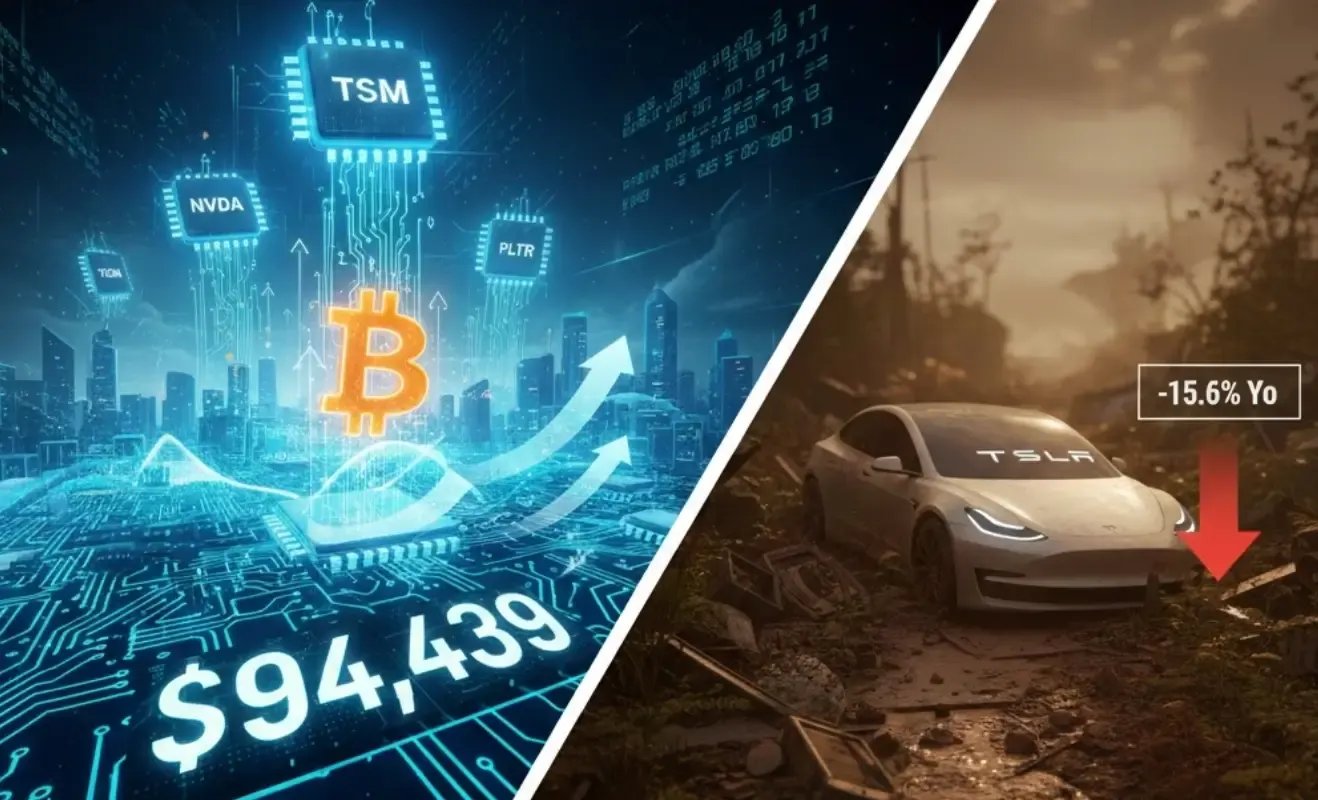
Bitcoin hits $93K as AI chip stocks rally, but Tesla lags in a dynamic 2026 market start.
As we dive into the first full trading week of 2026, the financial markets are delivering a rollercoaster start that has traders, investors, and analysts on the edge of their seats. Bitcoin has roared back above $93,000, fueled by massive ETF inflows and institutional bets that signal renewed confidence in digital assets. Meanwhile, AI-driven semiconductor stocks are stealing the show with explosive gains, led by NVIDIA's groundbreaking announcements at CES 2026. Yet not all is rosy—Tesla faces significant headwinds after a disappointing Q4 2025 delivery report that saw the EV giant cede its global crown to BYD.
Drawing from the latest data as of January 6, 2026, this comprehensive analysis breaks down the key stories shaping this wild market kickoff and what they mean for your trading strategies in the weeks ahead.
Key Takeaways
- ✓ Bitcoin surges to $94,439 on record $697M single-day ETF inflows, with $100K calls dominating options markets
- ✓ NVIDIA unveils Vera Rubin AI platform at CES 2026, featuring six new chips entering full production for H2 2026
- ✗ Tesla Q4 deliveries miss badly: 418,227 vehicles (-15.6% YoY), losing global EV crown to BYD
- ✓ TSM hits all-time highs after Goldman Sachs issues 35% price target hike on multi-year AI growth thesis
- ✓ Risk-on sentiment prevails: Dow tops 49,000 as AI infrastructure spending accelerates globally
Bitcoin's Explosive Rebound: ETFs and $100K Calls Dominate the Narrative
Bitcoin kicked off 2026 with a bang, surging past $93,000 amid a perfect storm of institutional demand and renewed safe-haven interest. After dipping to around $91,164 in the early Asian trading session, BTC climbed steadily throughout the day to reach intraday highs of $94,439 before settling around $92,224—still up over 2% on the session. The move marks a decisive break above the psychological $90,000 level that had served as resistance throughout late December 2025.
The catalyst behind this surge? A tidal wave of ETF inflows that caught even the most bullish analysts off guard. According to data from BitMEX Research, spot Bitcoin ETFs recorded their largest single-day inflows since October's flash crash, totaling an astonishing $697 million on January 5th alone. BlackRock's IBIT led the charge with $402 million in inflows, followed by Fidelity's FBTC at $186 million. This institutional buying pressure has created a supply squeeze that's pushing prices higher even as retail participation remains subdued.
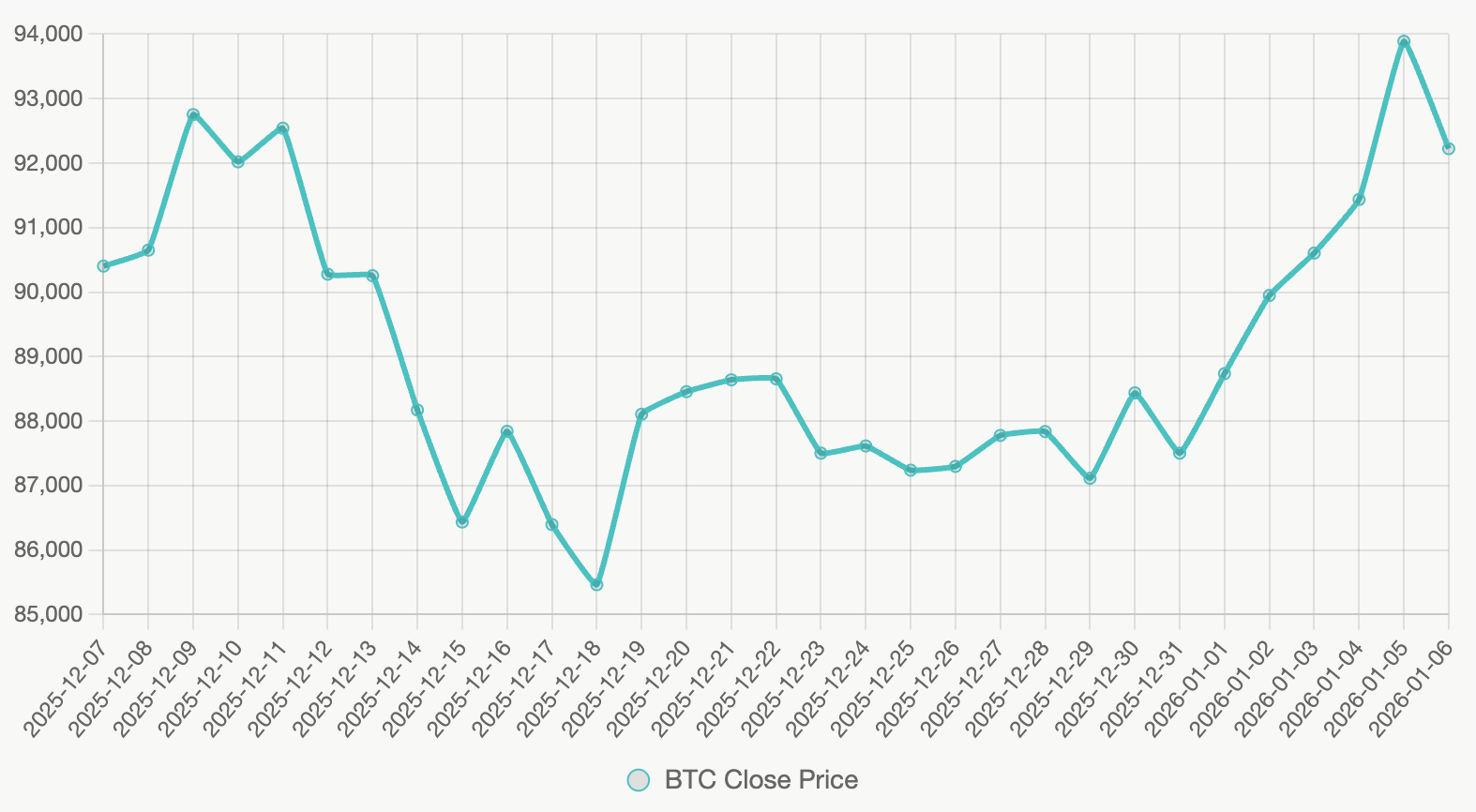
Perhaps more significant than the spot buying is what's happening in the options market. $100,000 strike calls expiring in late January and February have seen explosive volume, with open interest at the $100K strike now exceeding $2.1 billion across major exchanges. This positioning suggests traders are betting on a continuation of the rally into Q1 2026, potentially driven by the upcoming Bitcoin halving anniversary effect and continued ETF adoption.
The ETF flows we're seeing are unprecedented for early January. Institutions are front-running what they expect to be a major year for Bitcoin, with $100K now looking like a when, not if, scenario.
Adding fuel to the fire, Morgan Stanley filed for a spot Bitcoin ETF on January 3rd, signaling that even the most traditional Wall Street institutions are no longer willing to sit on the sidelines. Whale wallets (those holding 1,000+ BTC) have accumulated over 47,000 BTC in the past week alone, their largest buying spree since September 2024. On crypto-focused social platforms, discussions highlight BTC's resilience amid geopolitical tensions, with users noting a $250 billion crypto market cap addition in the first week of 2026. Altcoins like Sui (+18%) and XRP (+12%) have joined the rally, suggesting broad-based risk appetite in digital assets.
NVIDIA Leads the AI Charge with Vera Rubin Platform Reveal at CES 2026
All eyes in the tech world were on Las Vegas this week as NVIDIA CEO Jensen Huang delivered his highly anticipated CES 2026 keynote—and he did not disappoint. The leather jacket-clad executive unveiled the Vera Rubin AI platform, NVIDIA's next-generation architecture that promises to redefine what's possible in artificial intelligence computing. Named after the pioneering astronomer who provided evidence for dark matter, Rubin represents NVIDIA's most ambitious chip lineup to date.
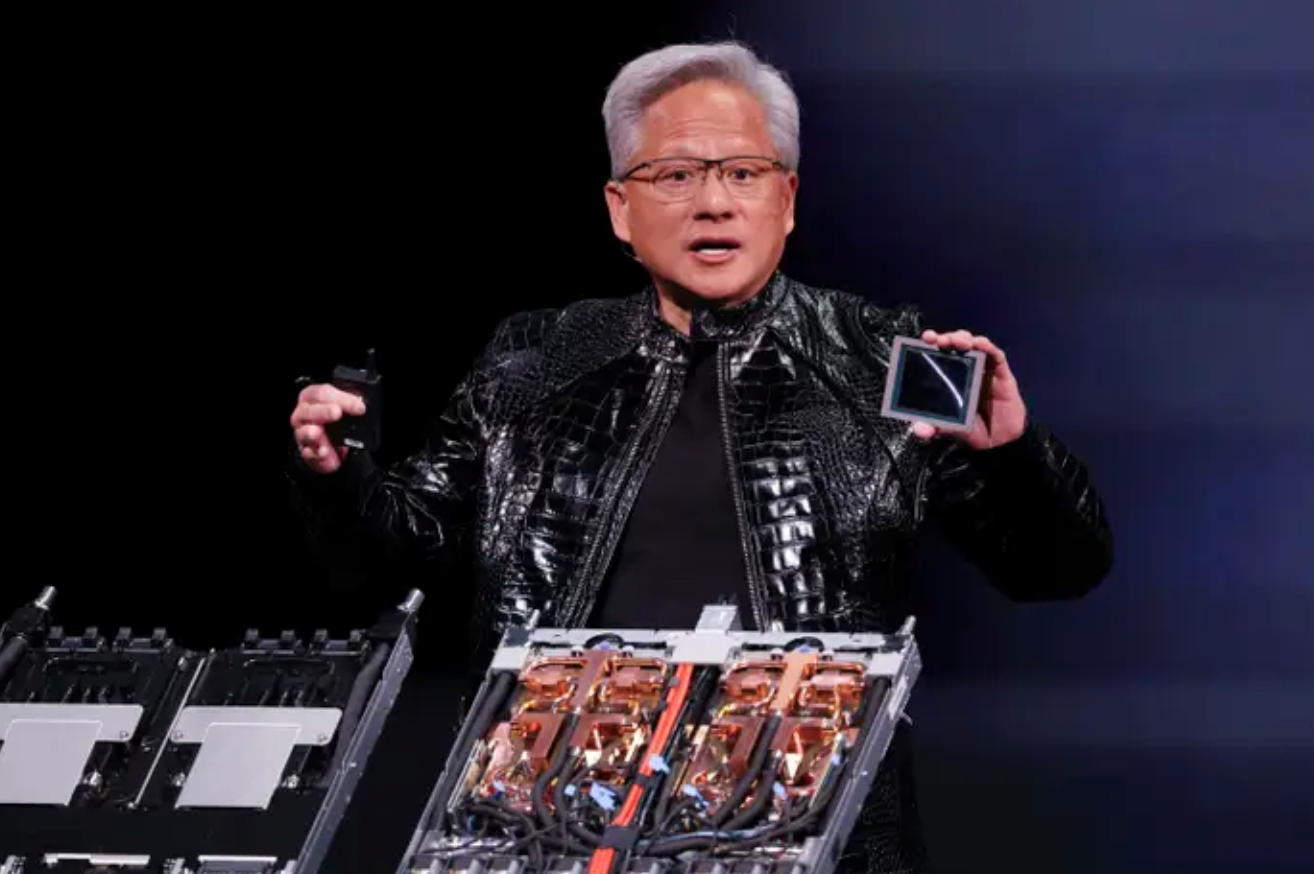
The Rubin platform enters full production immediately, with six new chips slated for commercial availability in H2 2026. Key highlights include the flagship Rubin Ultra, featuring an estimated 400 billion transistors and support for next-generation HBM4 memory capable of 12TB/s bandwidth. Huang emphasized that Rubin is designed from the ground up for "agentic AI"—autonomous AI systems that can reason, plan, and execute complex tasks without human intervention.
Perhaps most exciting for data center operators is Rubin's modular, cable-free design that dramatically simplifies deployment and cooling. NVIDIA is betting heavily on "physical AI"—robots, autonomous vehicles, and industrial automation systems that interact with the real world. The company demonstrated a humanoid robot powered by Rubin chips performing complex assembly tasks, drawing gasps from the audience.
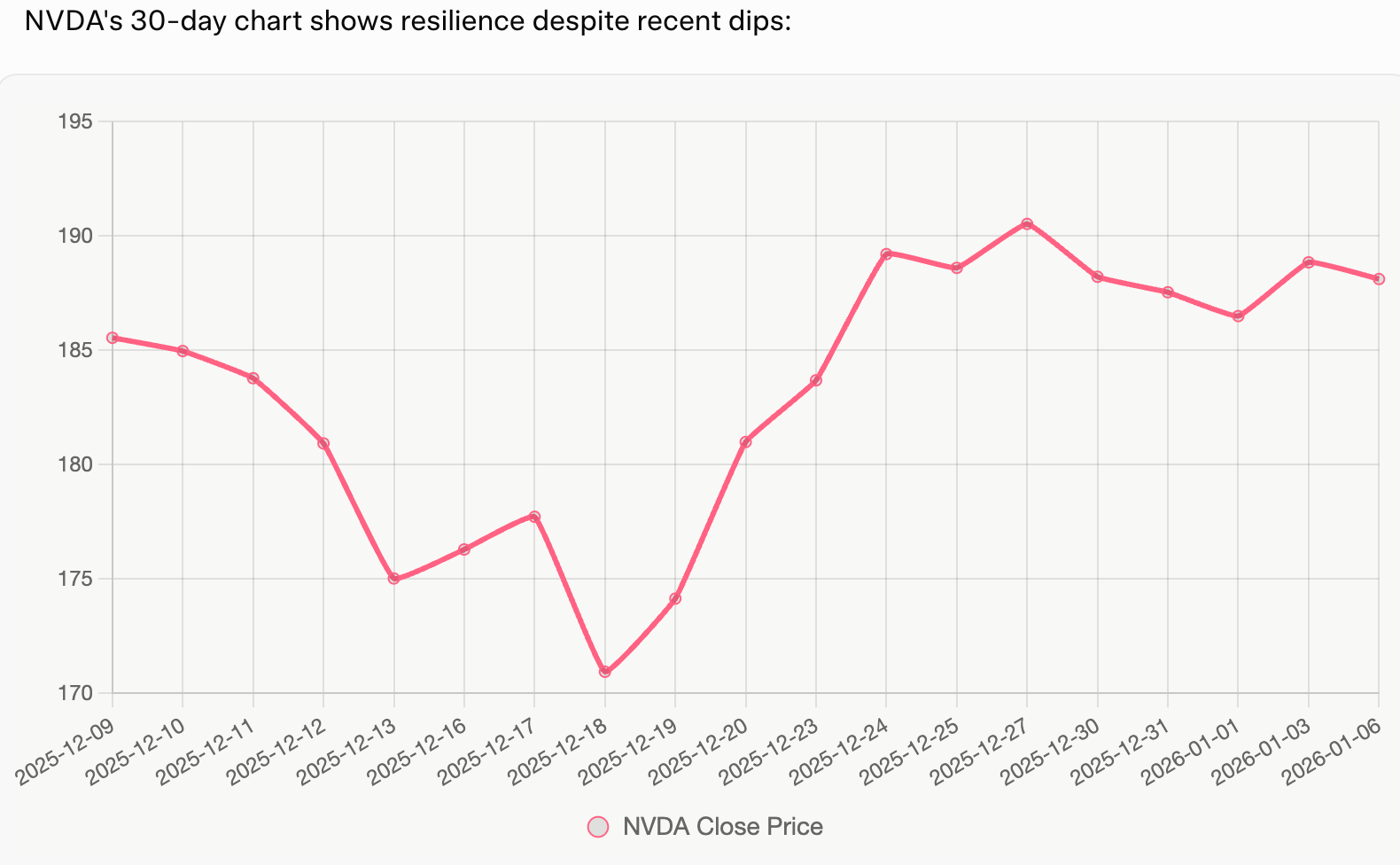
NVDA shares reacted positively but with notable volatility, closing around $188 after touching $192 intraday—up amid broader semiconductor gains. Analysts at Bank of America raised their price target to $225, citing "the start of a multi-year Rubin upgrade cycle." On social platforms, the buzz around agentic AI dominated discussion, with technologists debating whether Rubin could accelerate the path to artificial general intelligence (AGI).
NVIDIA Vera Rubin: Key Specifications
Tesla's Delivery Miss: Major Headwinds as BYD Claims EV Crown
While crypto and AI stocks celebrated the new year, Tesla investors received a cold dose of reality. The Austin-based EV maker reported Q4 2025 deliveries of just 418,227 vehicles—well below analyst expectations of 510,000 and representing a painful 15.6% year-over-year decline. Production came in at 434,358 units, suggesting Tesla is building inventory rather than selling through, a concerning sign for demand dynamics.
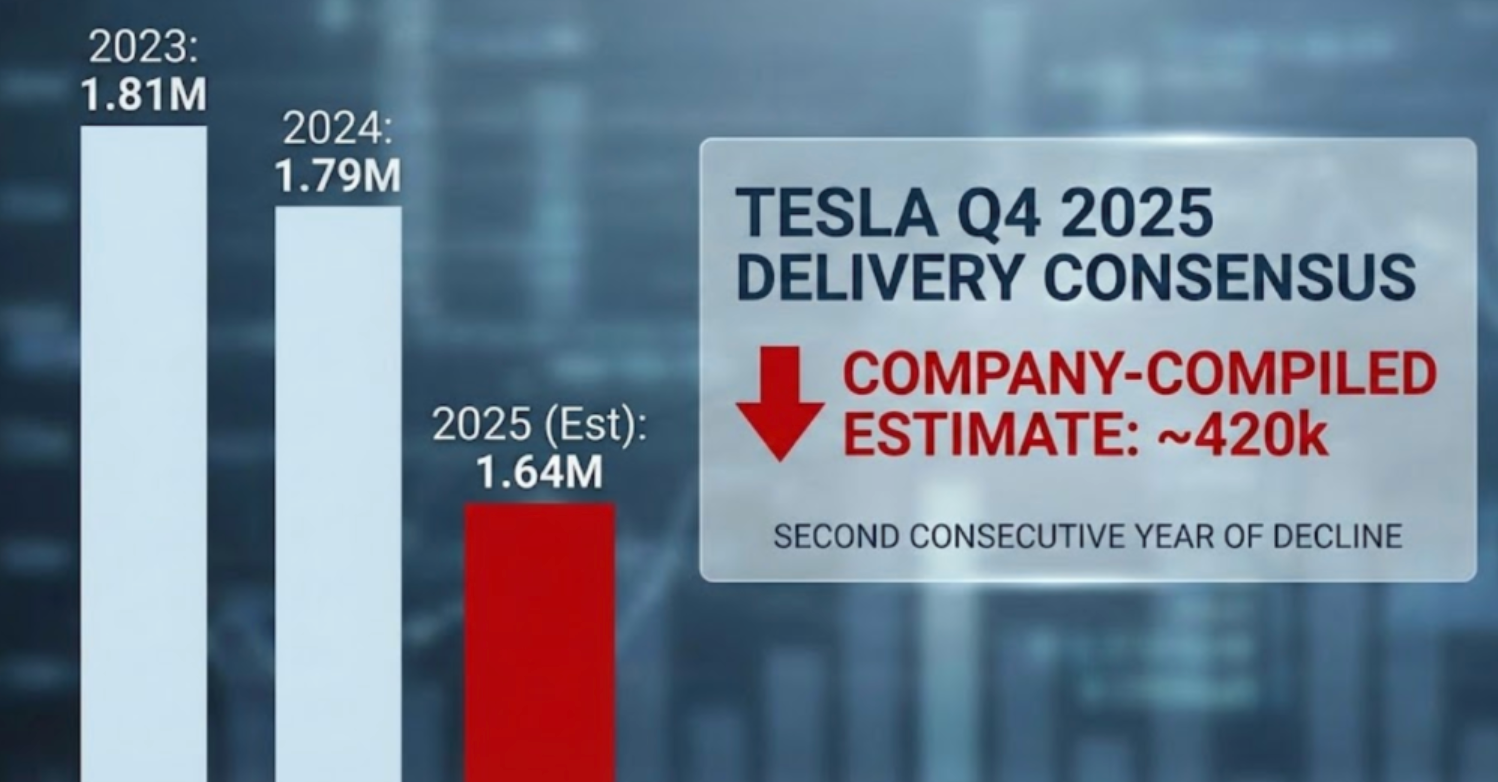
The numbers tell a stark story: Tesla's full-year 2025 deliveries came in at approximately 1.79 million vehicles, down from 1.81 million in 2024. This decline allowed China's BYD to officially claim the global EV sales crown, a symbolic but significant milestone that underscores the intensifying competitive landscape. BYD sold over 4.2 million vehicles in 2025, including hybrids, cementing its dominance in the world's largest auto market.
Tesla's demand challenges are structural, not cyclical. The expiration of tax credits, aging Model 3/Y designs, and FSD delays have created a perfect storm that won't resolve quickly.
Several headwinds converged to create this difficult quarter. The expiration of federal EV tax credits in several key markets reduced the effective price advantage Tesla had enjoyed. Meanwhile, competition from legacy automakers like Ford, GM, and Hyundai has intensified significantly—the Ford F-150 Lightning and Hyundai Ioniq 6 are stealing market share in segments Tesla once dominated. Perhaps most concerning for bulls is the continued delay of Full Self-Driving (FSD) achieving true Level 4 autonomy, a key pillar of Tesla's premium valuation.
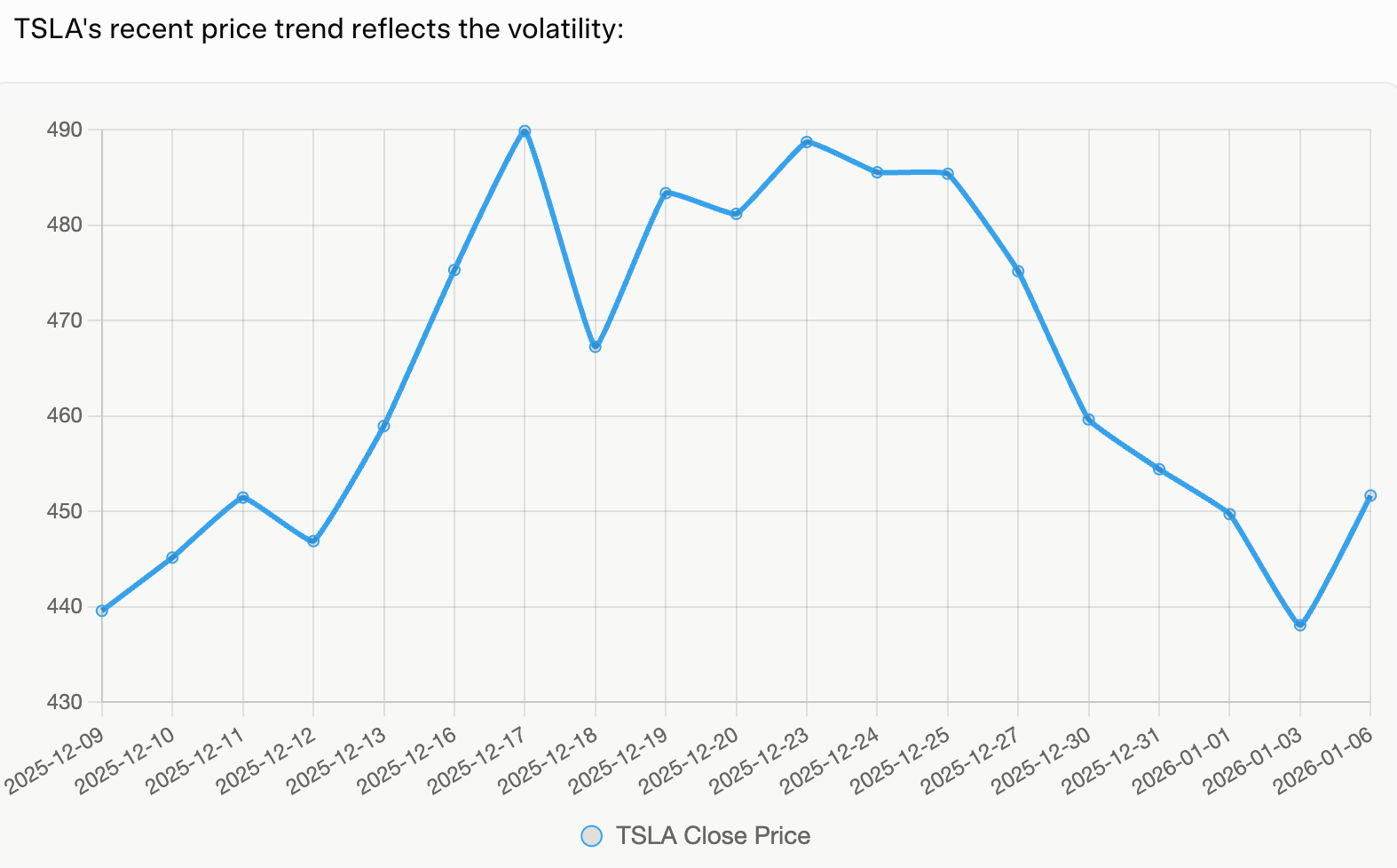
TSLA shares responded harshly, plunging over 4% to close around $433—erasing roughly $40 billion in market capitalization in a single session. Social media discussions remain polarized: Tesla bulls point to upcoming Cybertruck production ramps and the robotaxi initiative, while bears argue the stock's ~60x forward P/E ratio cannot be justified given declining deliveries. Several analysts have lowered price targets, with Morgan Stanley's Adam Jonas calling for "patience" as Tesla navigates this transition period.
Semiconductor Surge: TSM, ASML, and PLTR Ride the AI Infrastructure Wave
Beyond NVIDIA, the broader semiconductor sector is experiencing a renaissance driven by insatiable AI demand. Taiwan Semiconductor Manufacturing Company (TSM) hit all-time highs this week after Goldman Sachs issued a blockbuster upgrade, hiking their price target by 35% to $440 per share. The rationale? TSMC's virtual monopoly on advanced chip manufacturing (3nm and below) positions it as the irreplaceable backbone of the AI revolution.
Goldman's analysts project TSMC will invest over $150 billion in capital expenditure through 2028, primarily to expand capacity for AI accelerators and high-performance computing chips. With Apple, NVIDIA, AMD, and Qualcomm all dependent on TSMC's foundries, the company enjoys pricing power that few manufacturers can match. TSM shares closed at $325, up 4.2% on the session.
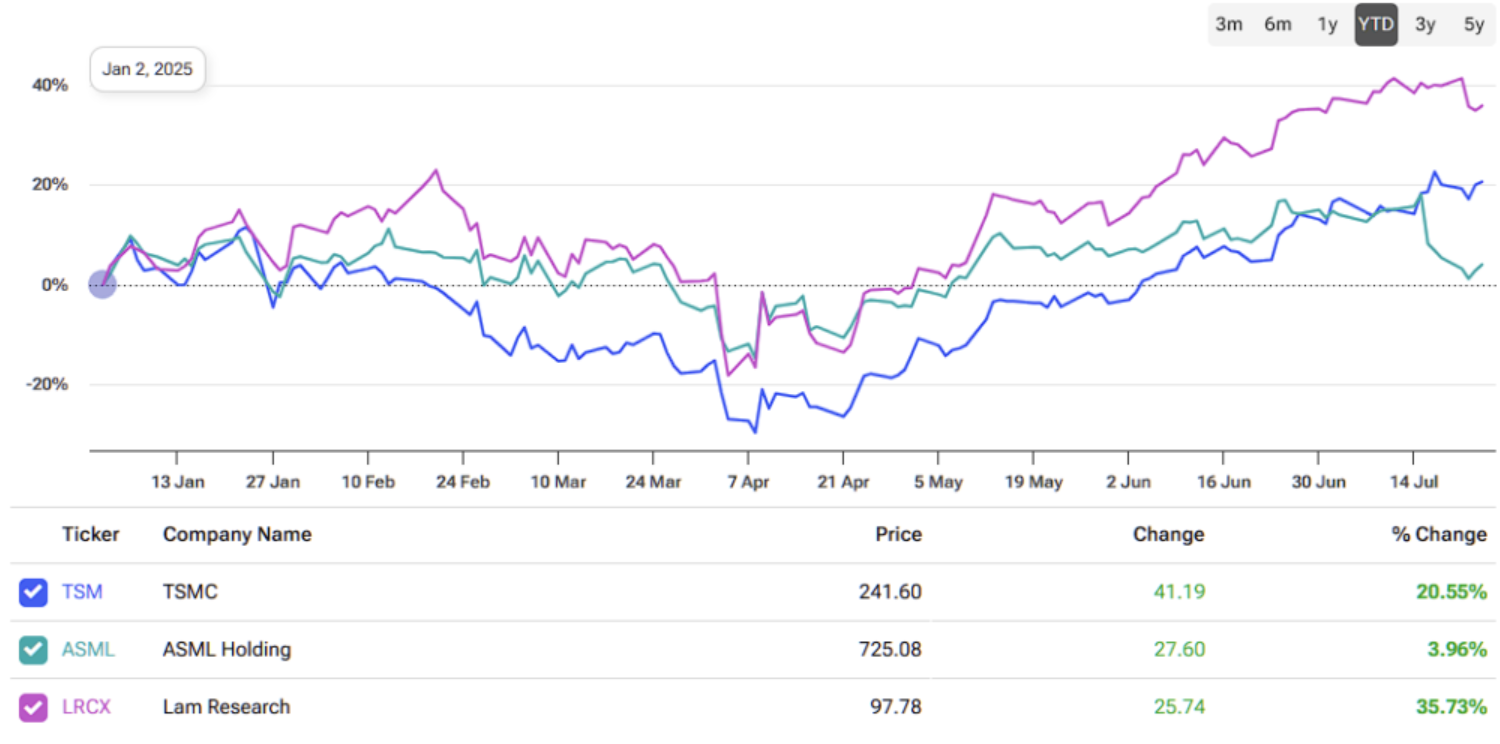
ASML Holding (ASML) rallied sharply on the back of multiple analyst upgrades, benefiting from surging demand for its extreme ultraviolet (EUV) lithography machines—the $300 million tools essential for producing cutting-edge chips. With order backlogs extending through 2027 and competitors years behind, ASML enjoys a near-monopoly in its niche. Shares closed at $1,237, up 3.8%, with analysts at Citi calling it "the most defensible moat in semiconductors."
Palantir Technologies (PLTR) deserves special attention as the AI software play of the moment. The company surged over 5% on news of expanded agentic AI contracts with both government and enterprise clients. Palantir's AIP (Artificial Intelligence Platform) has become the deployment layer of choice for organizations implementing large language models in production environments. Despite trading at elevated valuations (~85x forward earnings), analysts at Wedbush argue the company is "becoming the AWS of AI deployment." Shares closed near $180, with momentum traders piling into call options.
Market Outlook: AI Optimism Clashes with EV Realities
The first week of 2026 has established clear winners and losers in the technology landscape. Semiconductors and cryptocurrency are riding a wave of AI-driven optimism, with the Dow Jones Industrial Average topping 49,000 and the Nasdaq-100 reaching new highs. Risk appetite is unmistakably elevated, supported by expectations of continued Fed rate cuts and accelerating AI infrastructure investment.
However, Tesla's struggles highlight that not all technology bets are paying off equally. The EV sector faces structural challenges—intense competition, maturing demand curves, and uncertainty around government incentives—that contrast sharply with the seemingly limitless demand for AI computing power. Investors would be wise to differentiate between "AI beneficiaries" and "EV hopefuls" when constructing portfolios.
What to Watch This Week
- 📊 CPI Data (Friday): Inflation readings will influence Fed rate expectations
- 💼 Bank Earnings: JPM, BAC, C kick off Q4 reporting season
- 🤖 CES 2026: Additional AI announcements from AMD, Intel, Qualcomm
- ₿ Bitcoin ETF Flows: Sustainability of inflow momentum is critical
For traders, the key question is whether this momentum is sustainable or if overbought conditions will trigger pullbacks. RSI readings on several semiconductor names are pushing into overbought territory above 70, suggesting short-term consolidation is possible. Bitcoin's rapid ascent similarly warrants caution—previous $90K+ attempts have been followed by 10-15% corrections.
Nonetheless, the fundamental thesis remains intact: AI infrastructure spending is accelerating, and companies positioned to benefit—NVIDIA, TSMC, ASML, and Palantir—deserve premium valuations. Tesla, meanwhile, must execute on its autonomy and robotaxi ambitions to justify its current market cap. The divergence between AI winners and legacy tech underperformers may define market leadership throughout 2026.
Master the Markets with CFU's Trading Systems
Want to capture opportunities like the AI semiconductor surge? Our proven trading systems help you identify high-probability setups in any market condition. Join thousands of traders who've transformed their approach.
Download Free eBook →Stay tuned—2026 is off to a fiery start, and we'll continue providing the analysis you need to navigate these dynamic markets. Follow us for real-time updates on the opportunities emerging across crypto, AI, and beyond.