2026 Tech Trends: AI Explosion, SaaS Decline, Tesla Robotaxis, and Key Stock Insights for Investors
By Cash Flow University · · 9 min read
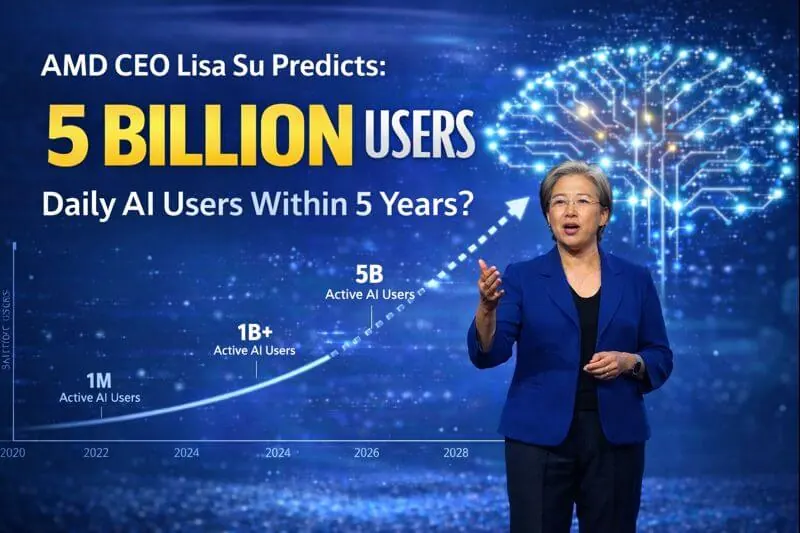
Explore 2026 tech trends: AI explosion stocks, SaaS decline investing, Tesla robotaxi insights, and key stock picks for investors. Analysis by Cash Flow University.
Five billion daily active AI users within five years. That's not a sci-fi projection—it's AMD CEO Lisa Su's forecast at CES 2026, and it represents a 5x expansion from today's 1 billion users. For investors, this exponential growth trajectory is reshaping every sector, from autonomous vehicles to enterprise software. In this comprehensive analysis, we'll break down the six most significant tech trends transforming markets in 2026 and reveal actionable investment strategies to position your portfolio for what's ahead.
📊 What We'll Cover
- MicroStrategy (MSTR) — Bitcoin proxy drama and $17B losses
- Tesla Cybercab — Regulatory wins unlocking robotaxi dominance
- AMD's AI Vision — Why Lisa Su says AI is "not a bubble"
- RAAS Revolution — Results as a Service replacing SaaS
- Death of SaaS Thesis — Which stocks to short and which to buy
- Mobileye (MBLY) — Betting big on Physical AI
MicroStrategy (MSTR) and MSCI Index Drama: A Bitcoin Proxy Under Scrutiny

MicroStrategy (MSTR), now rebranded as Strategy Inc., continues to make waves with its aggressive Bitcoin treasury strategy. In early 2026, MSCI made a pivotal decision not to exclude digital asset treasury companies like MSTR from its indexes, sparking a 6% after-hours surge in the stock. This reprieve averted an estimated $15 billion in potential selling pressure from index funds, allowing for a relief rally in crypto-linked equities.
However, there's a critical catch for investors: MSCI announced it won't count new share issuances from at-the-market (ATM) offerings toward index weighting calculations. This structural limitation handcuffs MSTR's ability to raise capital for additional Bitcoin purchases without diluting its index presence—a potential drag on future growth that the market hasn't fully priced in.
Despite this constraint, MSTR's balance sheet remains robust, bolstered by Bitcoin's price hovering around $91,000. Yet warning signs are emerging: major institutional players like BlackRock have been systematically offloading shares amid dilution concerns, and several analysts have issued downgrades citing the company's concentrated risk profile.
Tesla's Cybercab: Regulatory Wins Pave the Way for Robotaxi Dominance

Tesla (TSLA) is accelerating its autonomous vehicle ambitions with the Cybercab, and 2026 is shaping up to be the breakthrough year. A proposed U.S. congressional bill aims to dramatically lift the federal exemption cap for driverless vehicles from a restrictive 2,500 units to a massive 90,000 units annually—a 36x increase that would fundamentally change the autonomous vehicle landscape.
- Current cap: 2,500 exempt vehicles per manufacturer annually
- Proposed cap: 90,000 exempt vehicles (36x increase)
- Key provision: Bans conflicting state rules, creating unified national framework
- Production timeline: Cybercab manufacturing targeted for April 2026
- Initial market: Austin sightings confirmed, deployment imminent
Elon Musk has repeatedly teased this scale-up on X (formerly Twitter), though Tesla hasn't yet formally applied under current regulatory caps—a strategic move that suggests confidence in the new legislation passing. If approved, this regulatory update directly addresses longstanding NHTSA limitations that have bottlenecked autonomous vehicle deployment across the industry.
The investment thesis is compelling: Tesla is positioning itself to capture a significant share of the estimated $1.7 trillion global robotaxi market by 2030. Unlike competitors relying on expensive LiDAR systems, Tesla's vision-only approach and existing fleet data advantage could deliver superior unit economics at scale.
AMD's AI Vision: Not a Bubble, But a Billion-User Boom
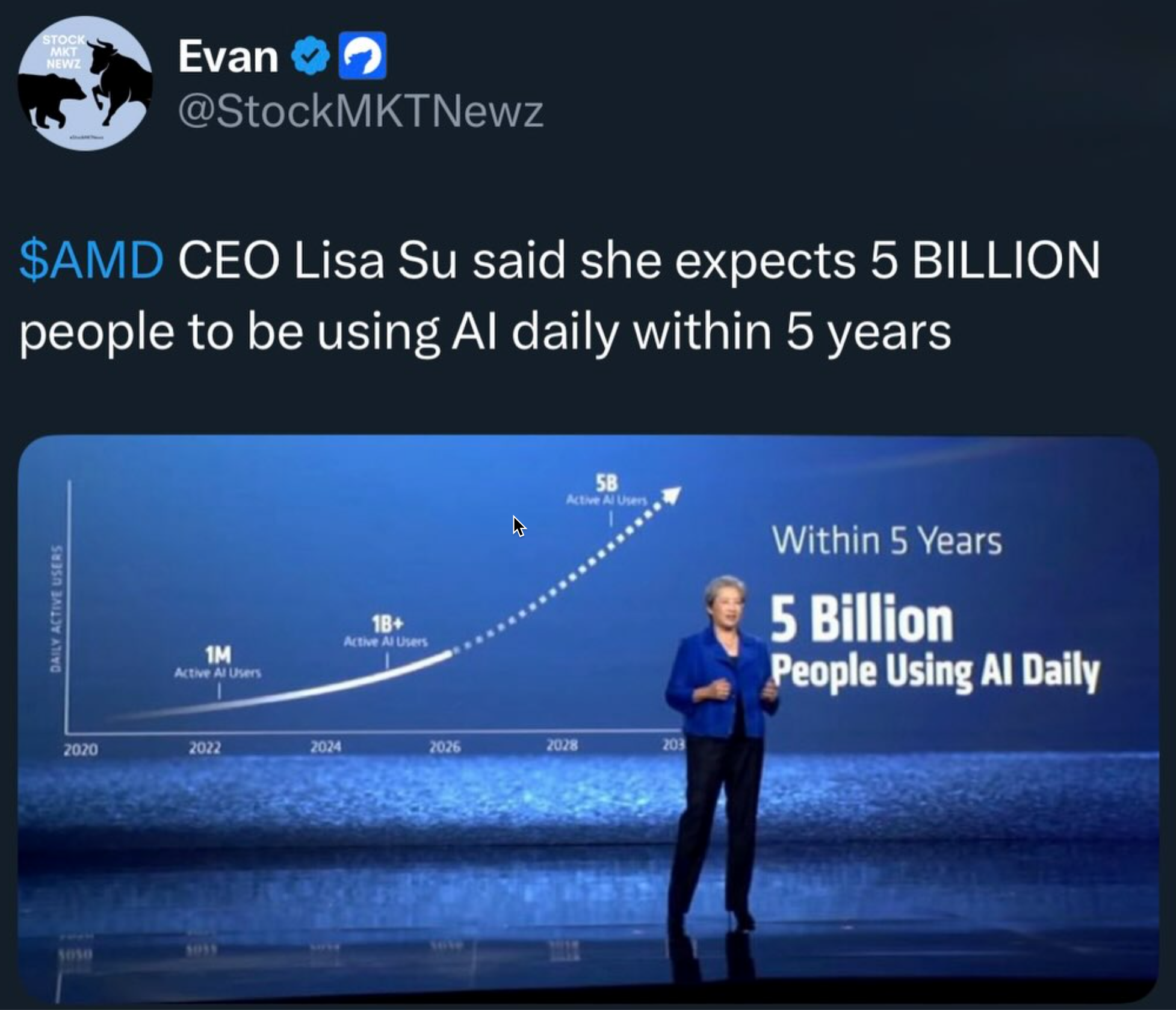
At CES 2026, AMD CEO Lisa Su delivered what may become the defining statement of the AI era: "AI is not hype." In an emphatic keynote that sent ripples through the investment community, Su dismissed growing bubble fears with hard data and a bold projection that reshaped market expectations.
AI has already expanded from zero to 1 billion users since ChatGPT's launch. Within five years, we will see over 5 billion daily active AI users. This is not speculation—it's the natural trajectory of transformative technology adoption.
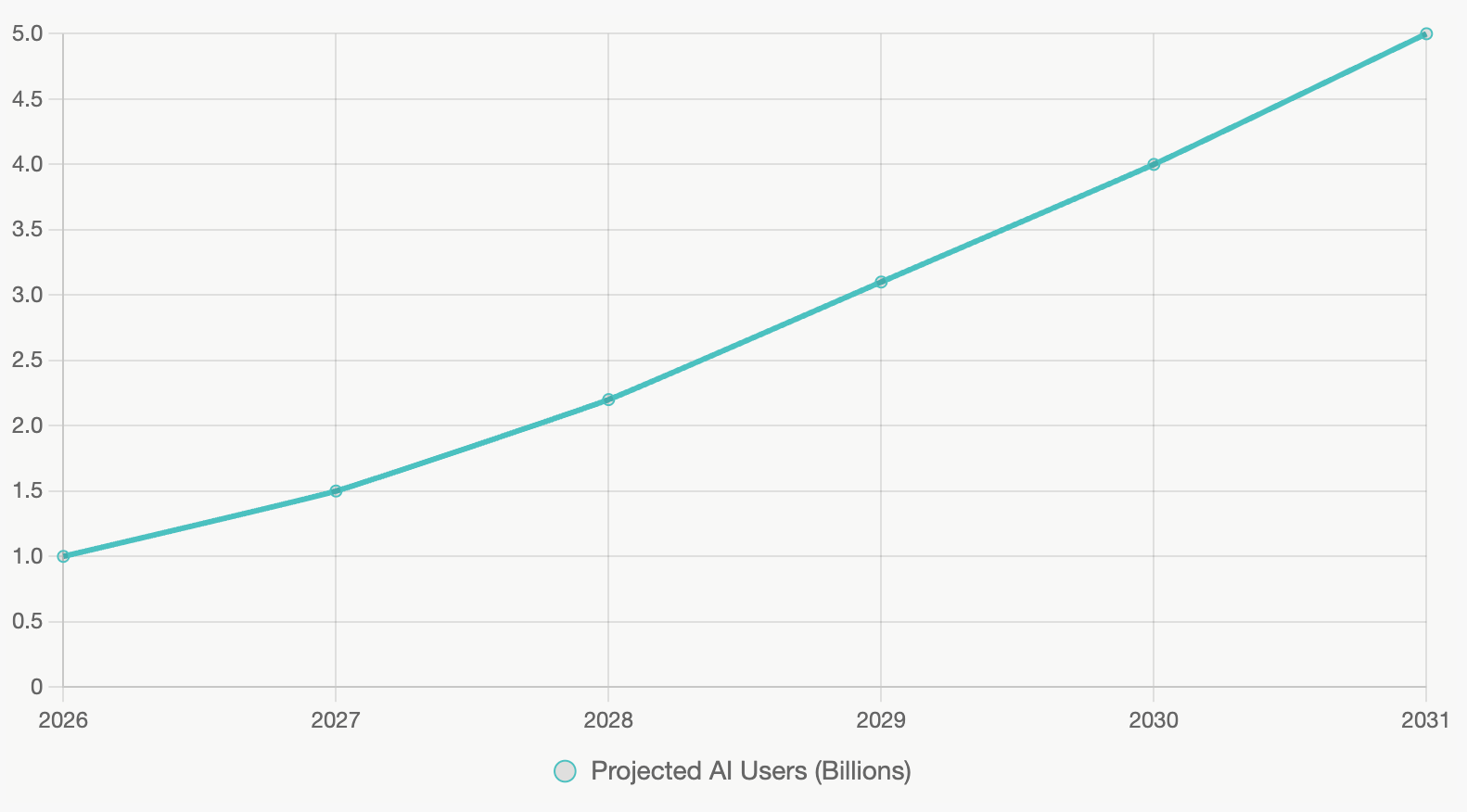
AMD is backing this bullish thesis with concrete product launches:
- Ryzen AI Max+ Series (Q1 2026) — Next-generation AI PC processors bringing on-device AI capabilities to mainstream consumers
- Embedded AI Solutions (Q2 2026) — Industrial-grade chips targeting manufacturing, logistics, and edge computing applications
- "Yotta-scale" Computing Infrastructure — Data center solutions designed for the exponential demand Su projects
Su's emphasis on "yotta-scale" computing demands—referring to computing at 10^24 operations—underscores AMD's conviction that current infrastructure will prove woefully inadequate. For investors, this signals a multi-year capital expenditure cycle benefiting semiconductor manufacturers and their supply chains.
🎯 AMD Investment Signals
- 5x AI user growth projection validates long-term semiconductor demand thesis
- Q1 2026 Ryzen AI Max+ launch creates near-term catalyst
- Industrial AI solutions diversify revenue beyond consumer and datacenter
- Su's rejection of bubble narrative suggests insider confidence in demand visibility
The Rise of RAAS: Is It Replacing SaaS, and How to Invest?
Results as a Service (RAAS) is emerging as a potentially disruptive business model that fundamentally reimagines enterprise software economics. Unlike traditional SaaS models charging upfront subscriptions regardless of outcomes, RAAS ties payments directly to verifiable business results—revenue growth, cost savings, efficiency improvements, or other measurable KPIs.
Real-world RAAS implementations are already gaining traction. Alibaba Cloud has launched RAAS offerings for enterprise clients, guaranteeing specific business outcomes or refunding fees. Bairong, the Chinese fintech AI platform, structures contracts around measurable improvements in customer acquisition costs and default rates.
The "Death of SaaS" Thesis: Short the Weak, Long the Enablers
Building on the RAAS disruption thesis, the "Death of SaaS" investment framework argues that AI is rapidly commoditizing traditional software, eroding the moats that pure-play SaaS companies have relied upon for premium valuations. The evidence is mounting: tools like xAI's Macrohard (launched in 2025) can now simulate AI-driven firms that replicate the functionality of enterprise software giants like Microsoft at a fraction of the cost.
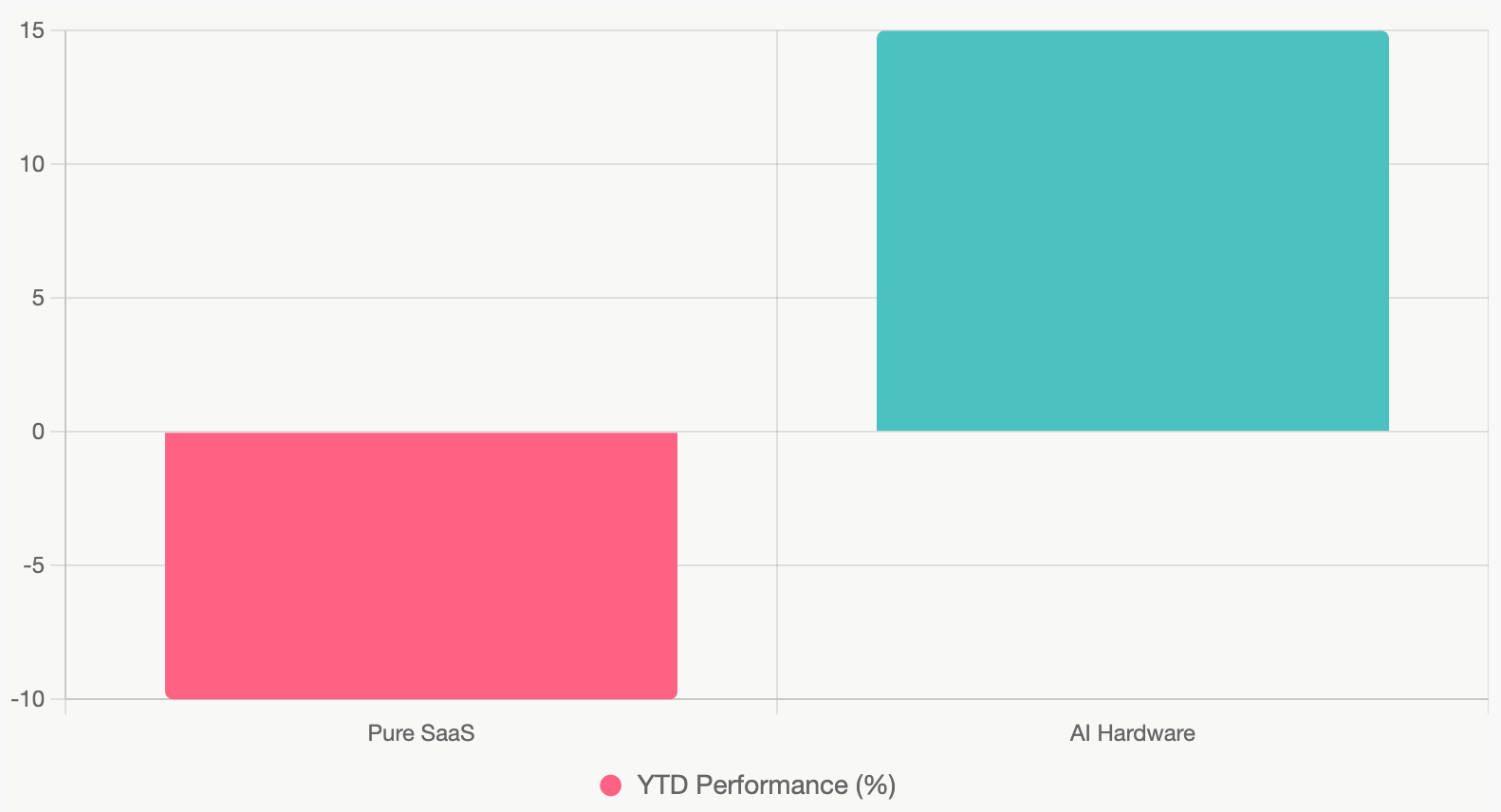
The investment thesis is straightforward: as AI makes code cheap and abundant, value shifts downstream to hardware, data centers, and energy—the physical infrastructure required to run AI workloads. Simultaneously, pure-play software companies face margin compression as their products become commoditized.
Vulnerable SaaS Positions
The following companies face elevated disruption risk from AI agents that can replicate their core functionality:
- Asana (ASAN) — Project management easily automated by AI agents
- HubSpot (HUBS) — Marketing automation commoditized by generative AI
- Smartsheet (SMAR) — Data tracking and workflow management at risk
- UiPath (PATH) — RPA facing competition from more intelligent AI agents
Paired Trade Strategies
Market data supports this thesis: the Morgan Stanley SaaS Index is down approximately 10% YTD in 2026, while AI hardware and infrastructure plays have posted significant gains. This divergence may be in its early innings.
👀 What to Watch
- SaaS company earnings calls for mentions of AI competitive pressure
- Customer churn rates at vulnerable SaaS companies
- Data center capacity additions and power consumption metrics
- AI chip order backlogs and pricing power
Mobileye (MBLY) Acquisition: Betting on Physical AI
Mobileye (MBLY) made a bold strategic move in January 2026, acquiring Mentee Robotics for $900 million—a transaction representing a striking 455% premium to prior valuations. The deal, announced at CES 2026, integrates Mentee's AI-driven humanoid robots with Mobileye's autonomous vehicle technology stack.
This acquisition positions Mobileye squarely in the emerging "Physical AI" category—the application of artificial intelligence to control robots and autonomous systems in the real world. Target applications include manufacturing automation, warehouse logistics, and eventually consumer robotics.
The strategic rationale is clear: Mobileye is diversifying beyond its core Advanced Driver Assistance Systems (ADAS) business following a challenging 15% stock decline in 2025. By acquiring Mentee's robotics capabilities, MBLY gains optionality in a high-growth adjacent market while leveraging its existing AI and sensor fusion expertise.
Investment Thesis: Positioning for the 2026 Tech Transition
The 2026 tech landscape is defined by transition: from digital AI to Physical AI, from subscription software to outcome-based services, and from regulatory bottlenecks to enabling frameworks. For investors, these shifts create asymmetric opportunities on both the long and short sides.
🎯 Key Investment Takeaways
- Long AI Enablers: NVDA, AMD, EQIX, CEG benefit from structural demand growth
- Cautious on Legacy SaaS: ASAN, HUBS, SMAR, PATH face commoditization headwinds
- Watch Regulatory Catalysts: Tesla's robotaxi bill could unlock massive value
- Physical AI is Emerging: MBLY's Mentee acquisition signals growing conviction
- Bitcoin Exposure Requires Discipline: MSTR's volatility demands careful position sizing
- RAAS Adoption Accelerating: Watch for business model transitions in enterprise software
Frequently Asked Questions
📚 Ready to Master Options Trading?
Get our free ebook covering proven strategies for generating consistent income with put credit spreads and call credit spreads—the same approach used to navigate volatile markets like the ones we're seeing in 2026.
Download Free Ebook →