The AI CapEX Problem & My 2026 Playbook
By Cash Flow University · · 3 min read

Explore AI CapEX challenges and strategies for 2026 in this comprehensive guide.
The AI CapEx Problem & My 2026 Playbook
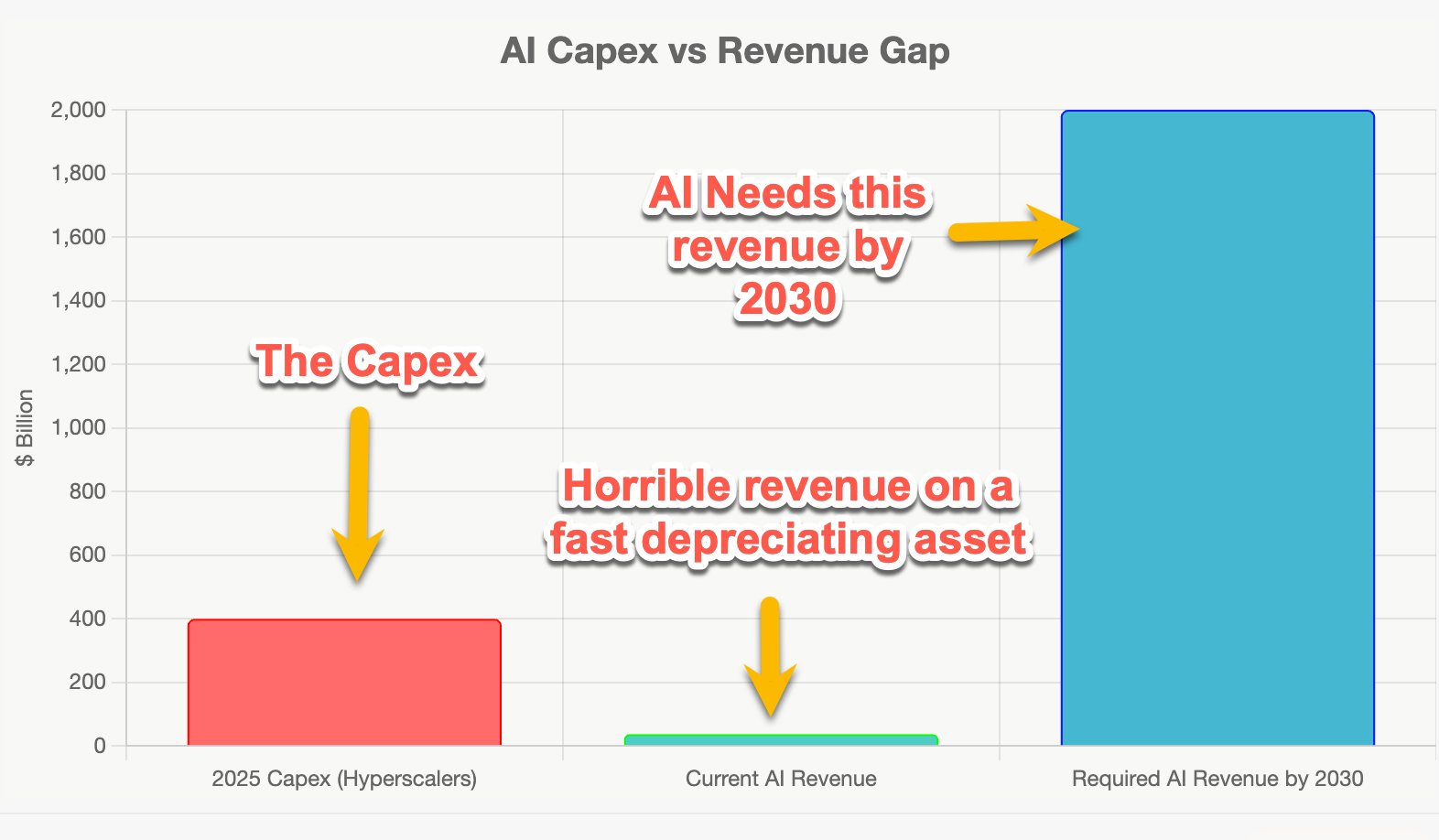
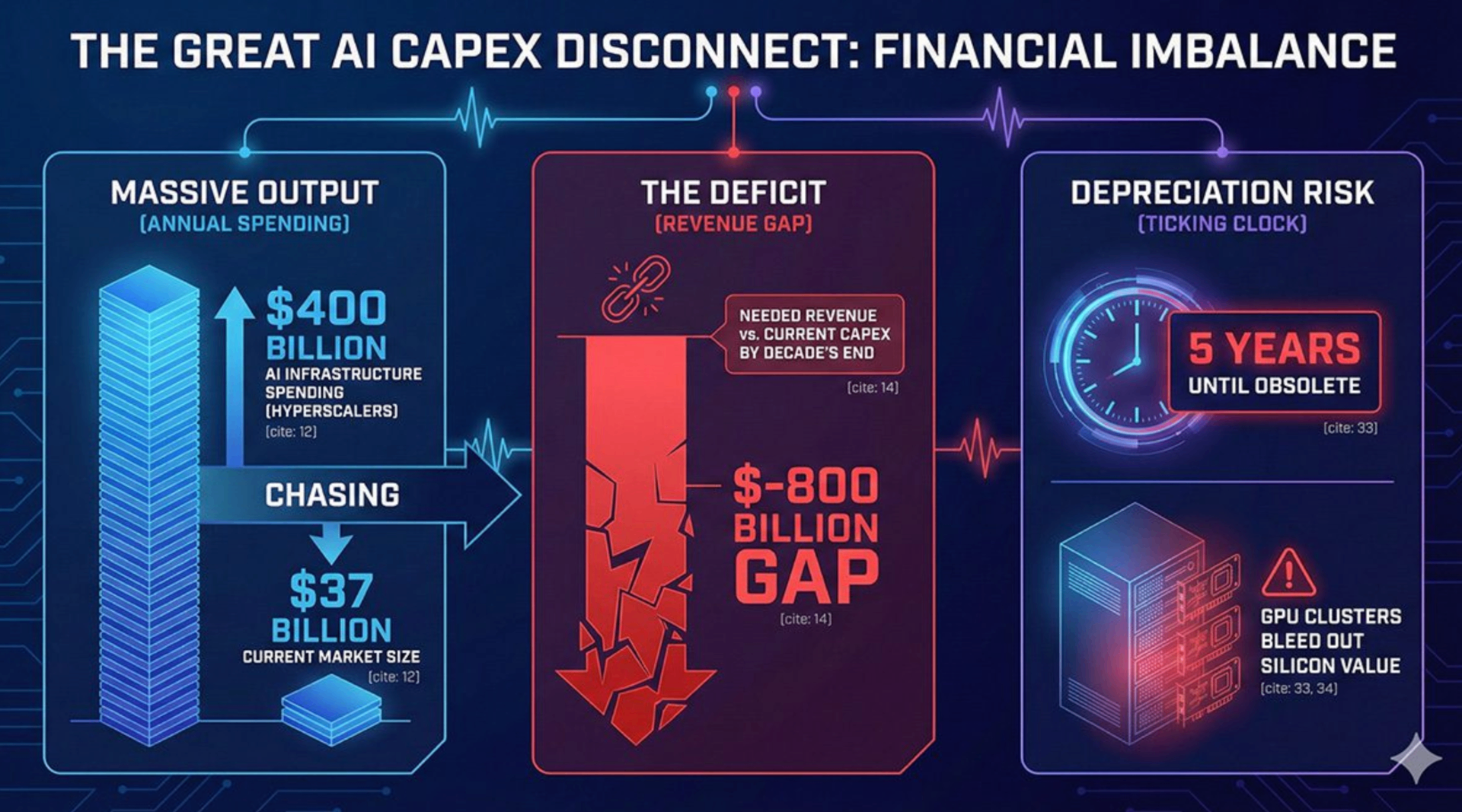
Artificial intelligence is no longer a future concept—it is a full-scale capital deployment cycle. In 2025 alone, companies spent roughly $400 billion on AI infrastructure. In 2026, that number is expected to rise to $500–600 billion.
Yet AI-specific revenue remains only $20–100 billion. This widening gap between capital investment and monetization defines the AI setup heading into 2026.
The Big Picture: CapEx First, Revenue Later
To justify the current AI infrastructure buildout, the industry needs nearly 100x revenue growth—roughly $2 trillion by 2030 according to Bain & Co.
This is not an impossible outcome, but it is unlikely to arrive on Wall Street's preferred timeline. Instead, the market is facing a front-loaded CapEx cycle with delayed, uneven, and highly concentrated revenue generation.
The Real Risks the Market Is Ignoring
This is not an argument that AI is failing. It is a timing and accounting problem that introduces real financial stress.
- Heavy debt and cash burn: AI infrastructure is consuming 60–94% of operating cash flow at some companies.
- The depreciation bomb: GPUs become functionally obsolete in 1–3 years but are often depreciated over 5+ years.
- Accounting mismatch: Some firms depreciate AI hardware over 10–12 years, increasing the risk of future impairment charges.
- Revenue concentration: Only ~3% of AI users currently pay for services at scale.
The setup resembles the telecom fiber buildout era—massive upfront spend followed by delayed monetization. The difference is that fiber was a 20-year asset. GPUs are not.
Why 2026 Is the Moment of Truth
The real test arrives with Q1–Q2 2026 earnings. If revenue growth fails to meet CapEx-driven expectations, the market narrative can shift rapidly.
That shift likely includes fear, panic selling, and renewed "AI bubble" headlines. This would not signal the end of AI—it would mark a reset.
This Is the Opportunity
Markets rarely collapse because a long-term thesis is wrong. They sell off when near-term expectations are missed.
The infrastructure is already being built. Demand will arrive—just not on Wall Street's exact schedule. That mismatch is where opportunity is created.
My 2026 Playbook
Step one: Stack cash and stay patient. Volatility is not the enemy—it is the edge.
Step two: Buy fear, not euphoria. When revenue shortfalls drive selloffs, focus on companies with dominant positioning and outsized earnings leverage.
- AMD – Explosive EPS growth potential
- NVDA – The enduring pick-and-shovel leader
- TSLA – Autonomy, robotics, and long-dated optionality
- AVGO – Broad AI exposure with consistent execution
- PLTR – Accelerating enterprise AI adoption
- MU – Memory leverage to AI training cycles
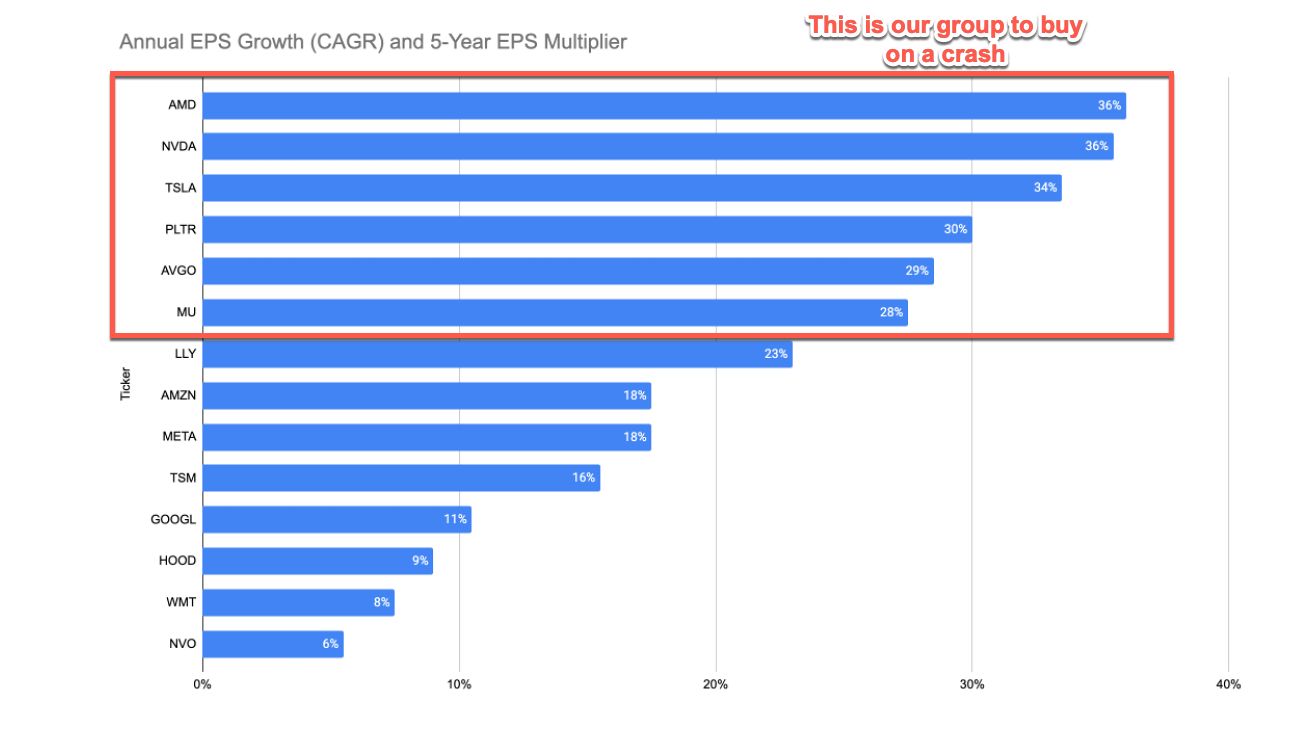
These names tend to sell off first during fear—and recover strongest once fundamentals reassert themselves.
Bottom Line
2026 is not about AI failing. It is about a CapEx reality check.
Big spending, slower revenue, earnings volatility, and sharp pullbacks are the setup—not the conclusion.
Stack cash. Buy the blood.
The infrastructure is built. Demand will come. When it does, the strongest companies will not just recover—they will dominate.
Ready to Level Up Your Trading?
Get our FREE eBook and learn how CFU traders generate weekly income using options. Visit joincfu.com/ebook and grab your copy today.