Navigating Market Volatility: How Middle East Headlines Impact Your Investment Portfolio
By Cash Flow University · · 4 min read
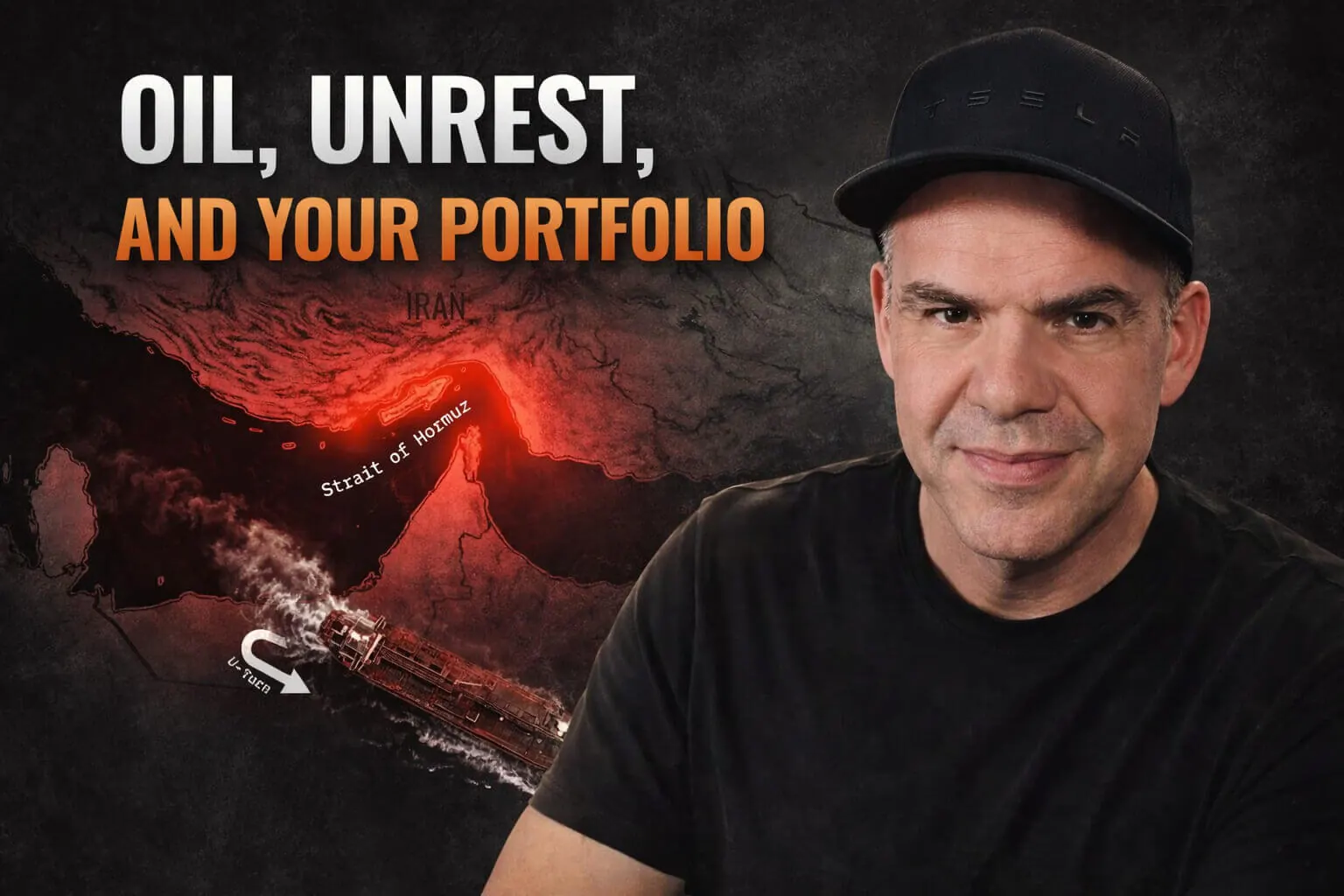
The key risk isn't the headline — it's whether shipping through Hormuz gets disrupted. Here's what changed, why oil is upstream of everything, and what to watch on Monday.
Let me cut straight to it — the real risk right now isn't the headline itself. It's whether the flow of energy through the Strait of Hormuz actually gets disrupted. That's the distinction most people miss when they see "Middle East tensions" trending. Headlines come and go. Shipping lanes getting rerouted? That changes real prices.
If you're watching your portfolio and wondering what Monday looks like, this is the framework I'm using.
🎥 Quick take on the Hormuz situation
What Changed
In the last 48 hours, the conversation shifted from conflict headline risk to logistics risk — the kind that changes real prices. When major shippers hesitate to move through the Strait, the market starts paying for uncertainty before anything physically breaks down.
The Strait of Hormuz is a narrow passage between the Persian Gulf and the Gulf of Oman. A huge chunk of the world's crude oil passes through it every single day. Any disturbance — geopolitical tension, logistical rerouting, even insurance repricing on tanker routes — causes an immediate reaction in oil prices.
Here's what most people get wrong: oil doesn't need an actual shortage to move. The presence of uncertainty alone is enough. When shipping companies start hedging their routes or pausing transits, that's the signal. That's when "headline risk" becomes "price risk."
Why It Matters — Plain English
Oil is upstream of everything. It's the base cost that flows into transportation, manufacturing, food production — basically the entire supply chain. When energy costs look unstable, businesses don't instantly collapse. But investors start re-pricing two things:
- The discount rate — if inflation expectations rise, interest rates stay higher for longer. That makes future earnings worth less today. Growth stocks feel this hardest.
- Margins — higher input costs compress profit margins, especially for companies that can't pass costs through to consumers quickly.
So even if your portfolio has zero direct exposure to oil companies, a sustained spike in crude can drag your holdings lower through the inflation → rates → valuation chain. That's the transmission mechanism Wall Street is watching right now.
The Monday Setup
The read going into Monday is binary:
Scenario A — Oil spikes and holds. This confirms the market is pricing in real supply disruption. Volatility lifts, yields respond like it's an inflation shock, and risk assets sell off — even without company-specific bad news. The selling broadens beyond just a few names.
Scenario B — Oil fades. The headline gets absorbed. The market treats this like noise, volatility compresses back down, and equities stabilize. The geopolitical premium gets priced out as fast as it was priced in.
Neither outcome is guaranteed. But having the framework before the open means you're making decisions, not reactions.
👀 What to Watch
- Oil: Does it spike and hold into Monday, or fade back?
- Volatility: Does VIX-style pricing lift meaningfully, or stay contained?
- Rates: Do yields respond like an inflation shock?
- Equity tape: Does selling broaden beyond a few names, or stay narrow?
How to Position — Not Predictions, Just Process
I'm not here to tell you where oil closes on Friday. What I will say is this: in volatile macro environments, defined-risk structures are your best friend. Credit spreads, for example, let you express a directional view while capping your downside — which is exactly what you want when the tape can gap in either direction on a Sunday night headline.
A few principles I'm leaning on right now:
- Stay informed, but don't react emotionally. Quick access to accurate framing gives you an edge over the crowd that's trading off push notifications.
- Watch the second-order effects. Oil spiking is the first domino. The real question is whether it triggers rate repricing — that's what moves the broader equity market.
- Size appropriately. In a binary setup, conviction is fine. Oversized positions are not. The gap risk is real.
- Diversify across time. If you're running options, spreading your expiration dates means a single event can't wipe your book.
🎯 Key Takeaways
- The key risk isn't the headline itself — it's whether shipping and flows through Hormuz get disrupted
- Sustained oil strength can lift inflation expectations and push rate pressure back onto equities
- The Monday read is binary: oil holds (risk-off impulse) vs. oil fades (headline gets absorbed)
Don't React to Headlines — Trade the Structure
Inside CFU, we translate the macro tape into actionable levels and defined-risk structures so you're not reacting emotionally to breaking news. Get the framework before the next open.
See What's Inside →