Covered Call Strategies: How to Manage Stocks Above Your Strike Price
By Cash Flow University · · 6 min read
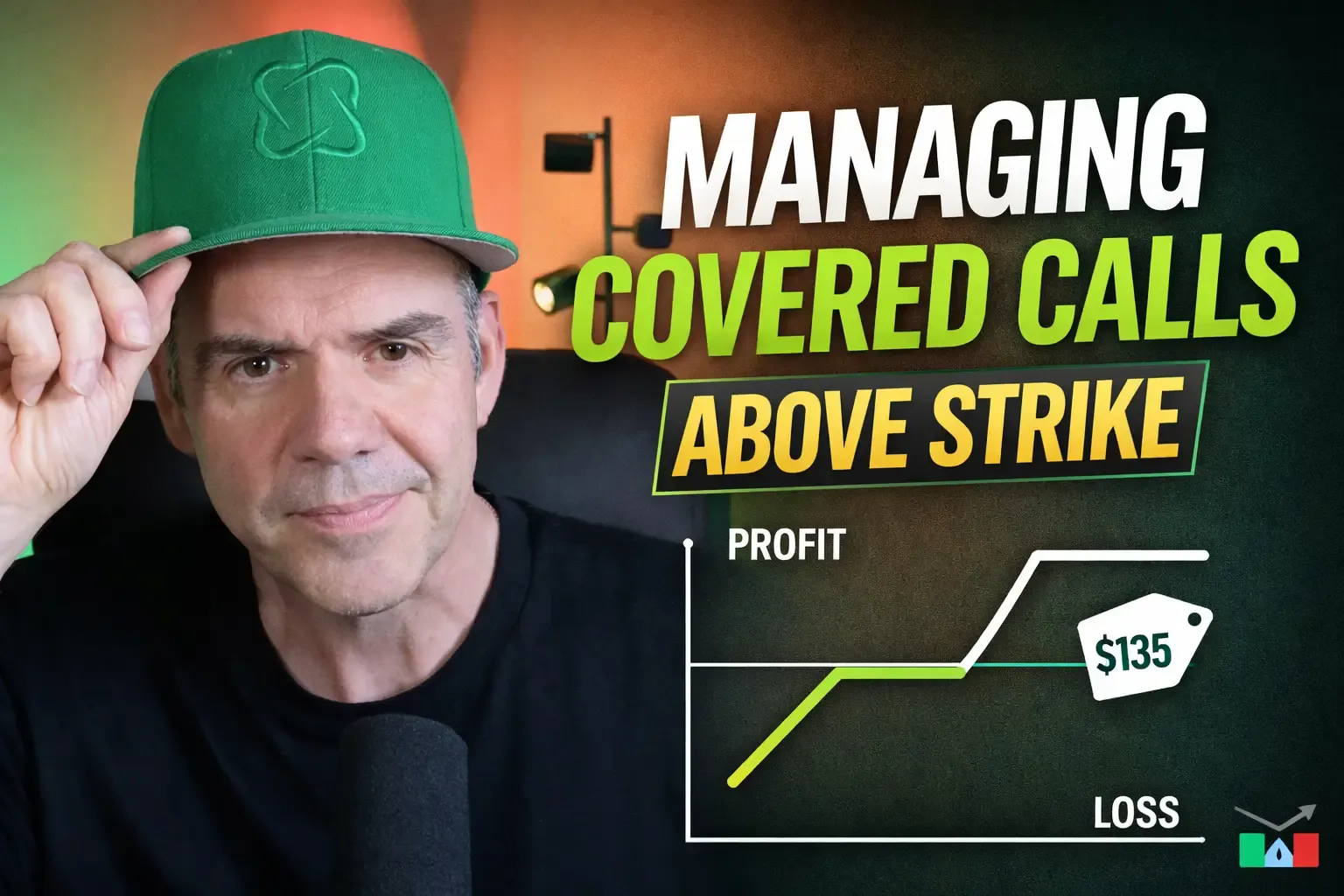
Stuck in the zone of regret? I break down exactly what to do when your stock blows past your covered call strike price, including rolling strategies and the wheel strategy.
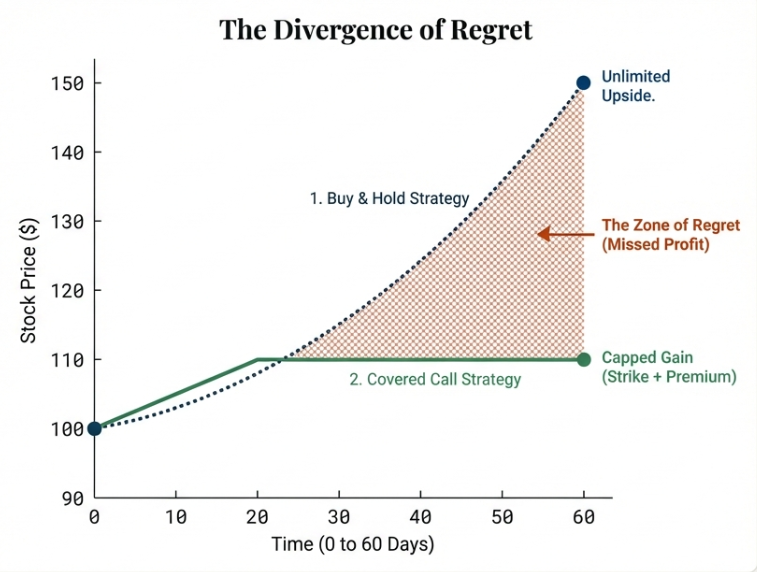
At Cashflow University, there's one question that comes up more than almost anything else: "What should I do if my stock has risen way above my strike price in a covered call position?" If you're reading this, chances are you're living it right now. And honestly? Congratulations. You've entered what I like to call the zone of regret.
I know that sounds dramatic. But if you've ever watched a stock you own blast through your strike price and keep running, you know exactly what I'm talking about. That sinking feeling of "I left so much money on the table." It's real. But here's the thing. You're not stuck. You have options (pun intended), and I'm going to walk you through every single one of them.
What is the Zone of Regret?
The zone of regret is that uncomfortable space where your covered call is deep in the money. You sold a call at, say, $50, and now the stock is sitting at $54 or $55. Every dollar above your strike feels like money you're missing out on.
But let's pump the brakes for a second. You sold that call for a reason. You collected premium. You defined your exit price. And if that stock gets called away at your strike, you're still making money above your cost basis. That's a win. It just doesn't feel like one when you see the stock trading higher.
The emotional side of this is real, and I don't want to minimize it. But your job as a trader isn't to capture every penny of upside. Your job is to generate consistent income, manage risk, and protect your capital. The zone of regret tests your discipline, and how you handle it separates good traders from great ones.
Understanding Your Options
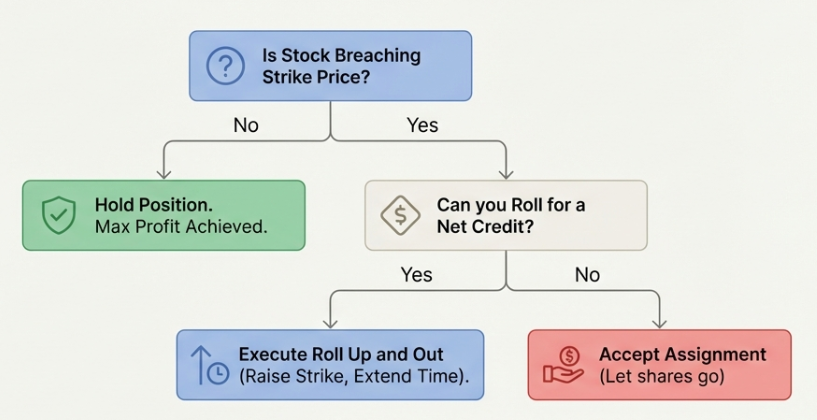
When your stock is trading above your strike price, you've got two primary paths forward. Both are valid, and the right choice depends on your outlook for the stock and your overall portfolio goals.
Path 1: Rolling the Covered Call
Rolling means closing your current short call and simultaneously opening a new one at a higher strike price, further out in time. The key question you need to ask yourself is: can I roll up and out for a net credit?
If the answer is yes, you're in business. That net credit means you're getting paid to give yourself more room for the stock to run. You're raising your effective sell price while collecting additional premium. That's a great outcome.
If the answer is no, meaning you'd have to pay a net debit to roll, then it usually doesn't make sense. You'd be spending money to chase a stock higher, and that's a losing game over time.
Path 2: Allowing the Option to be Exercised
Sometimes the smartest move is the simplest one. Let the call get exercised. Your shares get called away at the strike price, you keep all the premium you collected, and you walk away with a profitable trade.
I know it feels wrong to sell at $50 when the stock is at $55. But remember your cost basis. If you bought the stock at $45 and sold the $50 call for $2.00 in premium, your total return is $7.00 per share. That's a 15.5% gain. On a defined-risk trade. That's excellent.
Rolling Deep Dive: A Real-World Example
Let me walk you through a real scenario so you can see how this plays out in practice.
Say you sold the $50 call expiring this Friday, and the stock has run up to $54. You check your brokerage and see you can buy back the $50 call and sell the $52 call two weeks out for a net credit of $0.35. Here's what that means:
- You raised your effective sell price from $50 to $52, giving you an extra $2 per share of upside participation.
- You collected $0.35 in additional premium, which adds to your income on the trade.
- You bought yourself two more weeks for the stock to potentially pull back below your new strike.
If the stock does pull back to $51 or below, your new call expires worthless and you keep everything. If it stays above $52, you still sell at a higher price than your original plan. Either way, you improved your position.
The Wheel Strategy: Turning Exercise Into Opportunity
Now let's talk about what happens after your shares get called away. A lot of traders feel lost at this point. "I liked that stock. Now it's gone. What do I do?" This is where the wheel strategy comes in, and it's one of the most powerful income-generating approaches I teach at CFU.
🔄 The Wheel in Action
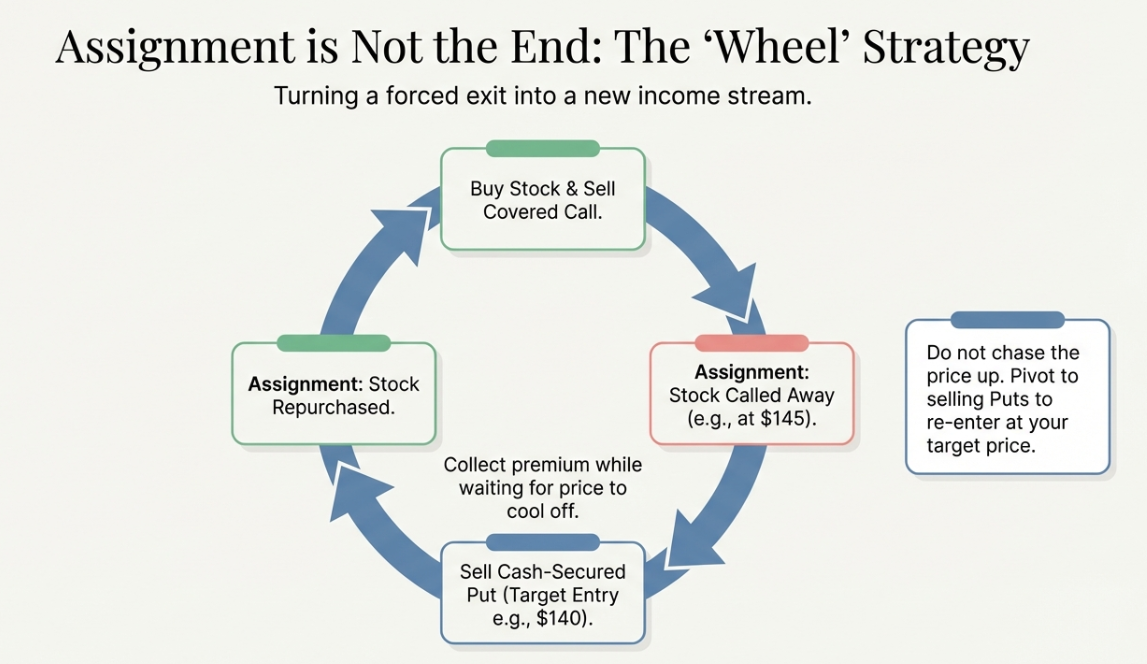
The beauty of the wheel is that you're generating income at every stage. When you own shares, you sell calls. When you don't own shares, you sell puts. You're always collecting premium, always managing risk, and always staying engaged with stocks you want to own.
Rolling vs. Exercise vs. Wheel: Which One is Right for You?
Common Mistakes in the Zone of Regret
I've seen traders make the same mistakes over and over when their stock runs past their strike. Here are the big ones to avoid:
- Panic rolling at a debit. If you can't roll for a credit, don't force it. Taking a debit to roll is throwing good money after bad. Let the trade play out.
- Emotional attachment to shares. "But I love this stock!" is not a trading strategy. If the trade hit your target, take the win and move on.
- Ignoring your cost basis. Always calculate your total return including premium collected. A trade that looks like a loss on the surface might actually be profitable when you factor in all the income you've generated.
- Revenge trading. Getting called away and immediately buying back at the top because you feel like you "need" to be in the position. Let the wheel work. Sell puts at a level you're comfortable with.
Keep Learning
The zone of regret is just one of many scenarios you'll face as a covered call trader. The more tools you have in your belt, the better you'll handle whatever the market throws at you. Here are some resources to keep building your skills:
- Beginner's Guide to Options Trading - Start here if you're new to options
- Position Sizing: The 2% Rule - How much to risk on each trade
- Strike Price Selection Guide - Choosing the right strike for covered calls
Ready to Master Covered Calls?
Join Cashflow University and get access to our complete covered call training, live trade alerts, and a community of traders who've been exactly where you are right now. Turn the zone of regret into a zone of opportunity.
Get the Starter Kit →