Sizing Your Option Trades: How Much Should You Risk Per Trade?
By Cash Flow University · · 5 min read
Learn the 2% rule that separates surviving traders from blown accounts. I break down exactly how to size every option trade to protect your portfolio from Black Swan events.
When you're starting out in options trading, or joining a community like Cashflow University, there's one question that comes up more than anything else: "How much of my portfolio should I put into each trade?"
I get it. You've found a great setup. The technicals look clean. The premium is juicy. Everything in your gut says "go big." But here's the thing. That impulse to size up is exactly what separates traders who survive from traders who blow up their accounts.
After years of trading options and studying what the best firms in the world recommend, from Fidelity to Schwab to Tasty Trade, I can tell you the answer is backed by both research and cold, hard probability models:
Never allocate more than 1-2% of your portfolio balance to any single trade.
Let me show you exactly why this matters and how to apply it.
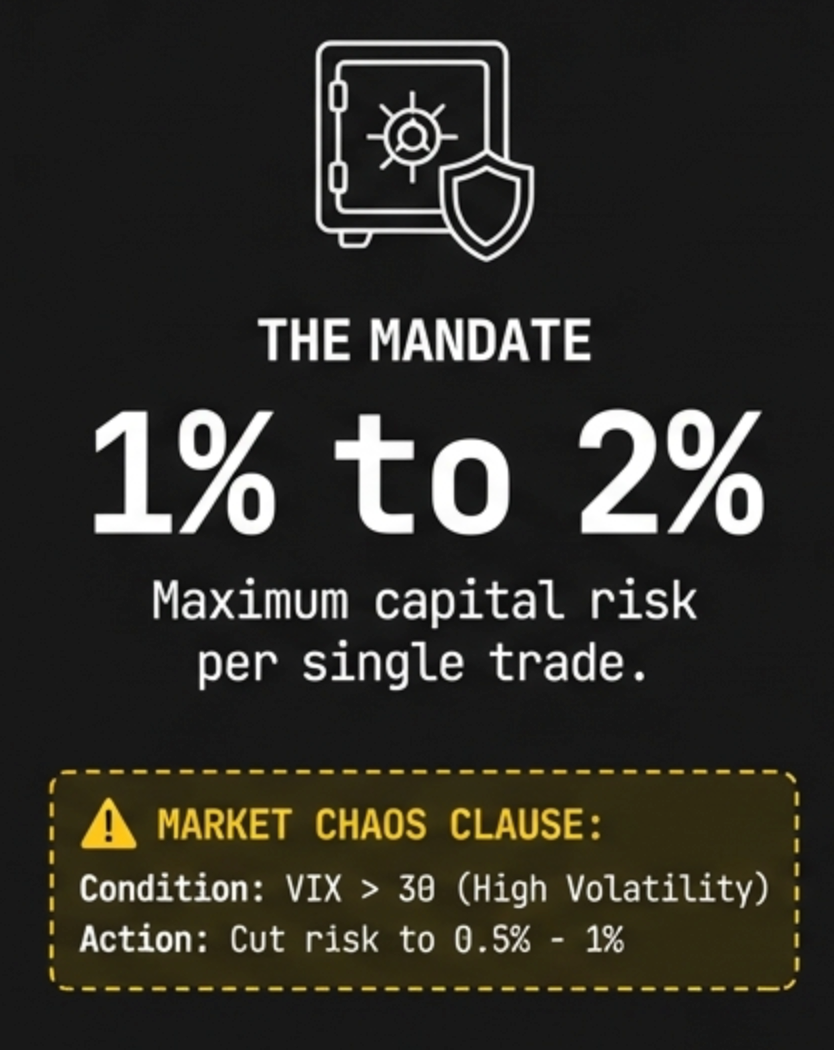
Understanding the 2% Rule
Let's make this concrete. Imagine you're working with a $10,000 portfolio. If you follow the 2% rule, you're capping your maximum risk at $200 per trade. That's it. No exceptions.
Now here's where options trading gives you an edge that stock trading doesn't. With options, you can define your risk before you even enter the trade. You know your max loss upfront.
For example, let's say you enter a put credit spread where each contract has a max risk of $50. Under the 2% rule with your $10,000 account:
Simple math: $200 / $50 = 4 contracts. That's your position size. No guessing, no gut feelings, just math.
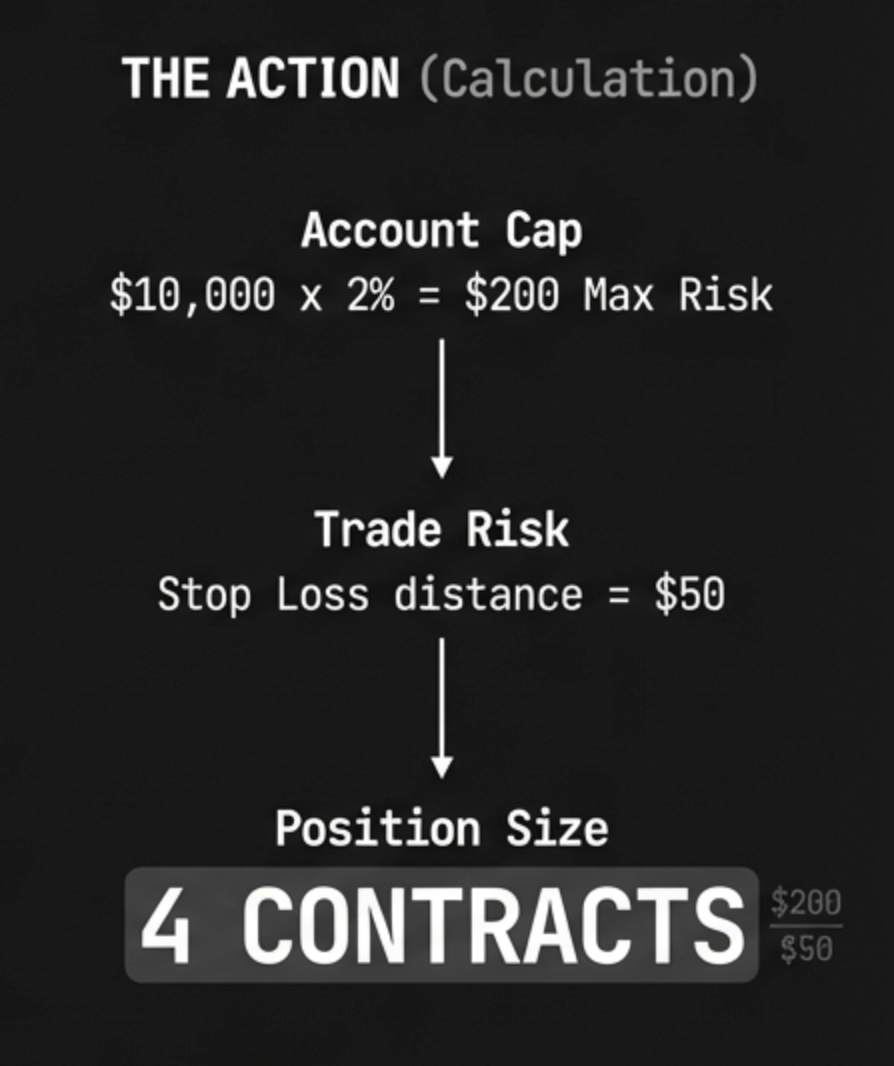
This is the exact process I walk through before every single trade. It takes 10 seconds and it's saved my account more times than I can count.
Preparing for Black Swan Events
Now let me tell you why this rule exists, because it's not about any single trade. It's about the trades you don't see coming.
A Black Swan event is a rare, unpredictable market shock that hits everyone at once. Think COVID-19 in March 2020. Think the Great Financial Crisis in 2008. Think the flash crashes that seem to come out of nowhere.
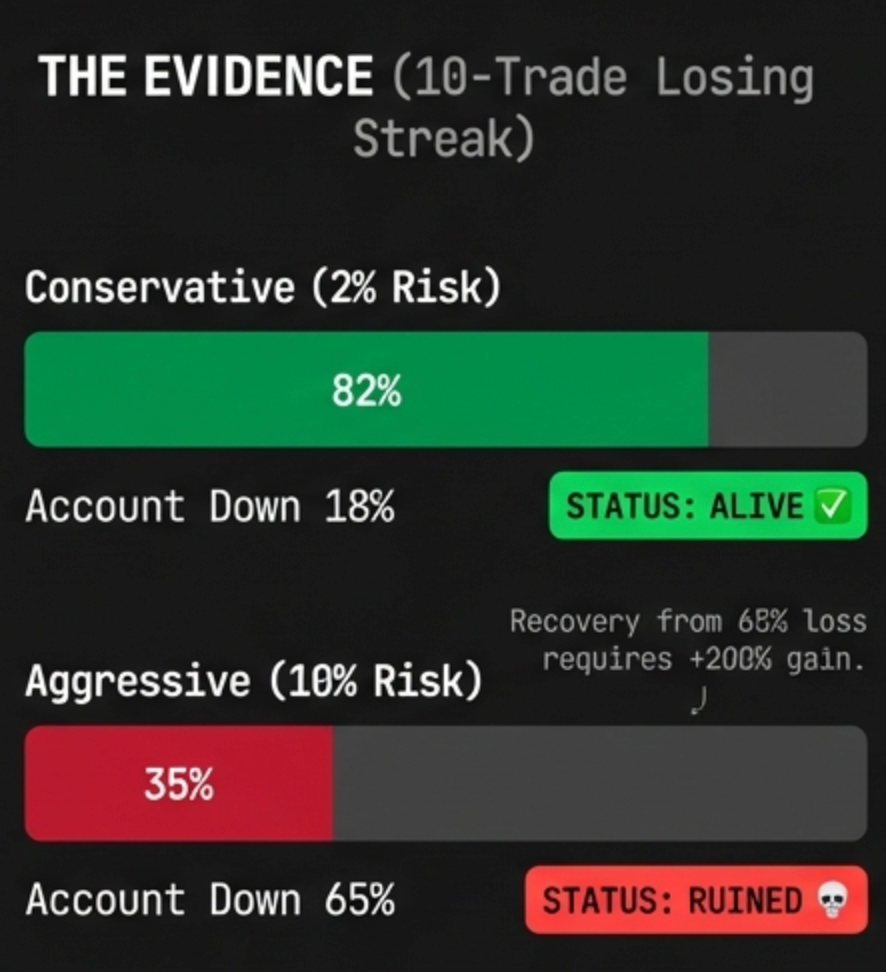
During these events, it's entirely possible to have 10 trades go against you simultaneously. Every position. Every ticker. All at once. Correlation spikes to 1.0 and diversification stops working.
Here's where the math gets real:
Look at that difference. The 2% trader loses 18% and lives to fight another day. The 10% trader loses 65% of their account and now needs a 186% return just to get back to even. That's not a setback. That's a death sentence for most accounts.
The VIX Chaos Clause
⚠️ When VIX is above 30, I cut my position size in half.
High VIX means the market is pricing in extreme moves. That's when I drop from 2% to 0.5-1% per trade. The premiums look tempting, but the tail risk is real. Survive first, profit second.
I learned this the hard way during COVID. The VIX spiked above 80 and positions that looked "safe" were getting demolished. If I'd been sizing at my normal 2%, I'd have been fine. But traders who sized up to chase those inflated premiums? Many of them never recovered.
Common Position Sizing Mistakes
After coaching hundreds of traders at CFU, I see the same mistakes over and over. Here are the big three:
1. Oversizing on "Sure Things"
There's no such thing as a sure thing in options trading. I don't care how perfect the setup looks. I've seen textbook trades get wrecked by earnings surprises, FDA announcements, and tweets from CEOs. The 2% rule applies to every trade, especially the ones you're most confident about.
2. Revenge Trading After a Loss
You take a loss. It stings. So you double your next position to "make it back." This is how small losses become catastrophic ones. After a loss, your job is to get smaller, not bigger. The market doesn't owe you anything.
3. Ignoring Correlation
Having five different trades open doesn't mean you're diversified. If all five are tech stocks and the NASDAQ drops 3%, you've essentially got one giant trade. I always check my sector exposure before adding new positions. If I'm already heavy in one sector, I'll pass on the next setup no matter how good it looks.
Making It Practical: Your Position Sizing Checklist
📋 Before Every Trade, Ask Yourself:
- What's my current portfolio balance? (Not what it was last week.)
- What's 2% of that balance? That's my max risk for this trade.
- What's the max loss per contract on this spread?
- How many contracts can I take? (Max risk / risk per contract)
- Is VIX above 30? If yes, cut to 1% max.
- Am I already exposed to this sector? If yes, consider passing.
Print this out. Tape it to your monitor. Make it muscle memory. The traders who last in this game aren't the ones with the best entries. They're the ones with the best risk management.
Keep Learning
Position sizing is just one piece of the puzzle. If you're building a complete options trading foundation, check out these guides:
- Options Trading for Beginners: The Ultimate Step-by-Step Guide
- How to Pick the Right Strike Price for Covered Calls
- What Are LEAPS Options? A Beginner's Guide to Long-Term Calls
- Understanding Theta Decay: Why Time Is Money in Options Trading
Ready to Trade with a Real System?
Get our free Options Starter Kit with the exact frameworks, checklists, and strategies I use every single week.
Get the Free Starter Kit →