Options Trading: How We Traded MU, RCL, JPM & CL (Wins & Lessons)
By Cash Flow University · · 6 min read

Al breaks down four real trades from his options journey, including wins with Royal Caribbean and JP Morgan, plus hard lessons from Micron. Learn what separates textbook trades from costly mistakes.
Welcome, fellow traders. I've been eager to sit down and share some real insights from a series of trades that include the good, the bad, and everything in between. Today we're dissecting actual positions, looking at what worked, what didn't, and pulling out lessons you can apply to your own trading.
Whether you're new to options or you've been at this for years, there's something here for everyone. Let's dive in.
Meet Amol: 20 Years of Market Experience
Amol is a seasoned investor with over two decades in the markets. He started as a traditional buy-and-hold investor, building wealth the slow and steady way. About three years ago, he made the transition to options trading after discovering the CFU community.
His journey mirrors what a lot of traders experience. You start with the basics, get comfortable, then realize there's a whole other level to this game. Options opened up new possibilities for generating income and managing risk in ways that simple stock ownership never could.
What makes Amol's perspective valuable is his willingness to share both his wins and his mistakes. Too many traders only talk about their victories. Amol shows us the complete picture.
The Four Trades We're Breaking Down
Micron (MU): A Hard Lesson in Timing and Hedging
Let's start with the trade that didn't go according to plan. Micron was one of those positions where the initial thesis made sense, but execution and timing created problems.
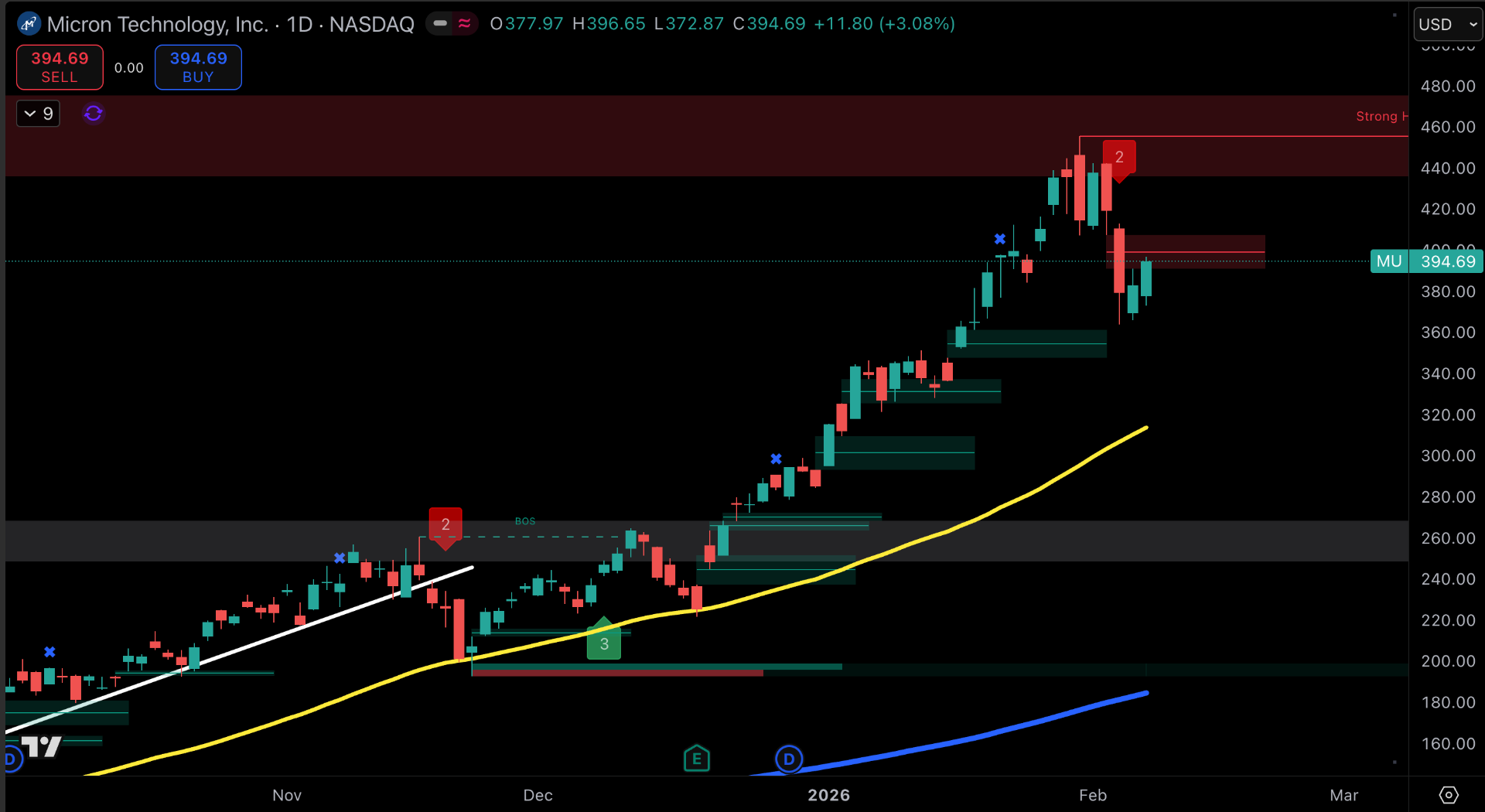
MU daily chart showing the rally from $200 to $460 with key support zones and moving averages
Amol went into this trade looking to hedge with long puts. The idea was solid. Semiconductors can be volatile, and having protection in place seemed like the smart move. But here's where things got complicated.
The market didn't move the way he anticipated. Timing was off, and the position started working against him. Instead of cutting losses early, he held on hoping for a reversal. Sound familiar? We've all been there.
The key takeaway from Micron comes down to two things. First, hedging is critical, but you need to size it appropriately. Second, over-committing capital to any single position, even with a hedge in place, creates unnecessary risk. When you're too heavy in one trade, every tick against you feels like a punch to the gut.
Amol learned that even good ideas can become bad trades when execution breaks down. The lesson isn't to avoid hedging. It's to respect position sizing and have clear exit criteria before you enter.
Royal Caribbean (RCL): When Planning Pays Off
Now let's look at the opposite end of the spectrum. Royal Caribbean was a textbook trade that shows what happens when you approach the market with structure and discipline.
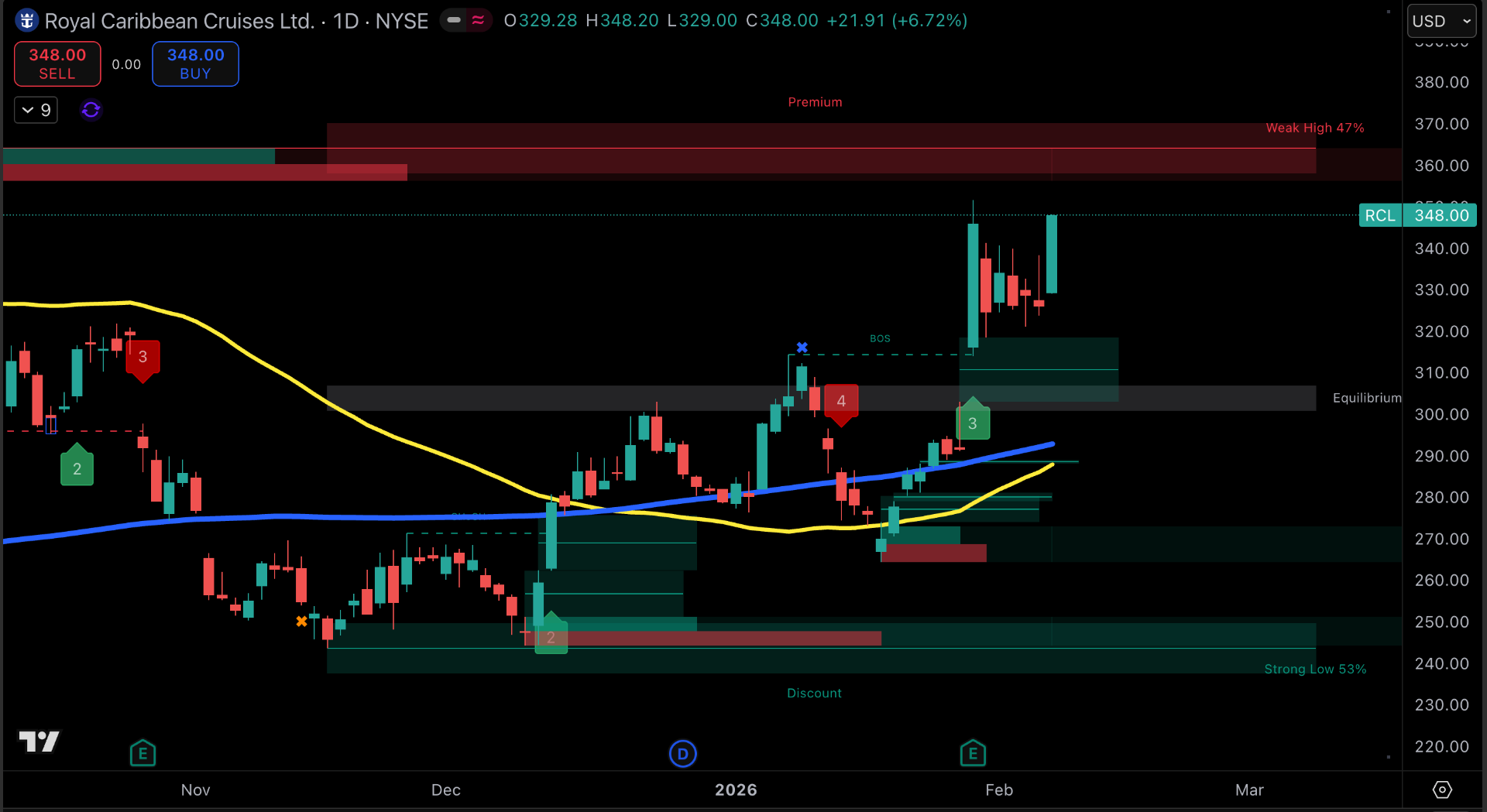
RCL daily chart showing premium/discount zones, equilibrium levels, and the breakout through resistance
Amol identified the setup, planned his entry, defined his exit criteria, and executed. Nothing fancy. Just solid fundamentals applied consistently. The result? An overnight exit with solid gains.
What separated this trade from Micron wasn't luck. It was preparation. Before entering, Amol knew exactly what he was looking for. He had a target profit level and a maximum acceptable loss. When the trade moved in his favor quickly, he took the win and moved on.
Here's the thing about market chaos. It's going to happen. Volatility spikes, news drops unexpectedly, sectors rotate without warning. You can't control any of that. What you can control is your preparation.
Structure and planning are the pillars of consistent trading. RCL proved that when you stick to your system, good things happen. Not every time, but often enough to build real wealth over time.
JP Morgan (JPM): The Power of Systematic Trading
JP Morgan represented a different kind of win. This wasn't about catching a big move or timing the market perfectly. It was about consistency and following a well-defined system.
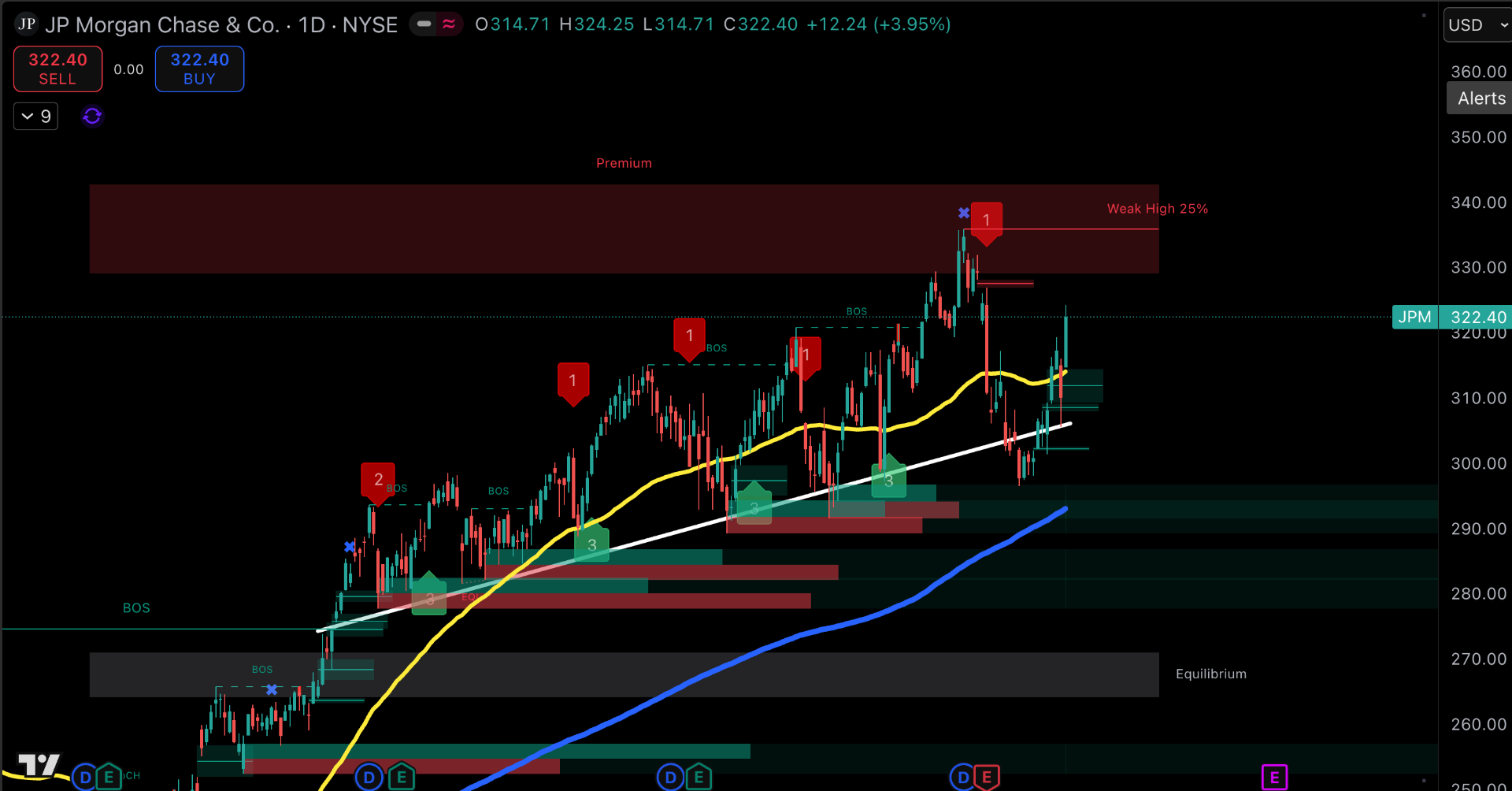
JPM daily chart showing Break of Structure (BOS) markers, premium/equilibrium zones, and key moving averages
Amol approached JPM with a focus on high probability setups. The kind of trades where you're not trying to hit home runs. You're just looking to get on base repeatedly. Singles and doubles add up.
What made this trade work was discipline. Amol had a structure for evaluating opportunities, and JPM fit the criteria. He didn't overthink it or second-guess the setup. He executed according to his plan and let probability do the heavy lifting.
This is where a lot of traders go wrong. They find a system that works, then start making exceptions. One trade doesn't feel right, so they skip it. Another looks too good to pass up, so they oversize. Before you know it, you're not really following any system at all.
JPM showed the power of staying disciplined. Trust your process, execute consistently, and let the edge work over time.
Colgate (CL): Reading Technical Breakouts
The final trade we're examining is Colgate, which demonstrated the power of technical analysis when done right.
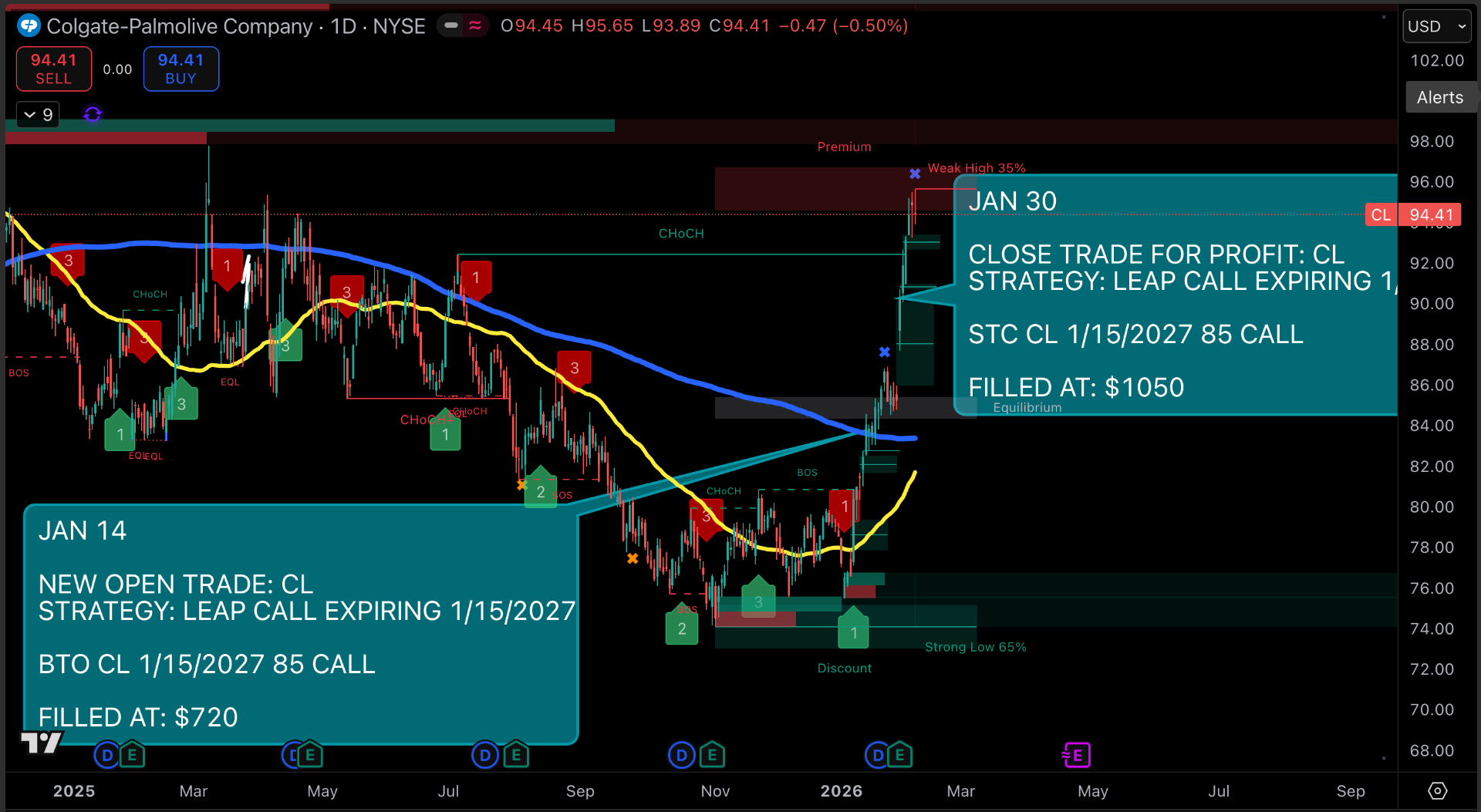
CL daily chart showing LEAP call entry at $720 (Jan 14) and exit at $1,050 (Jan 30) with premium/discount zones
This was a classic technical breakout opportunity. The chart showed a clear pattern, indicators aligned, and Amol recognized the setup from experience. When you've studied enough charts, these patterns start jumping out at you.
The key with technical breakouts is execution. You need to act when the signal triggers, not before and not too late. Wait for confirmation but don't chase. It's a balance that takes practice to develop.
Colgate delivered because Amol trusted what the charts were telling him. He didn't try to predict or outsmart the market. He simply responded to what was happening in front of him.
Technical analysis isn't about being right all the time. It's about identifying high probability setups and managing risk appropriately. When you get that combination right, trades like Colgate become possible.
- Always have a hedge ready but size it appropriately
- Conviction matters but not at the expense of risk management
- Structured planning separates consistent winners from gamblers
- Discipline beats prediction in the long run
- Continuous learning turns losses into future wins
What Truly Matters in Trading
Reflecting on these four trades reveals something important. Success in options trading isn't about finding the perfect setup every time. It's about having a process, executing consistently, and learning from every outcome.
Micron taught humility and the importance of position sizing. Royal Caribbean showed what structured planning can achieve. JP Morgan demonstrated the power of systematic execution. Colgate reinforced the value of technical analysis when applied correctly.
Each trade carries its own lessons. The traders who improve over time are the ones who extract those lessons and apply them going forward. They don't repeat the same mistakes twice. They adapt.
Join the CFU Community
If you're looking to improve your trading, the CFU community offers resources designed to accelerate your learning. From our free starter kit to our active Discord community, there's support available at every level.
Trading doesn't have to be a solo journey. Having experienced traders to learn from, discuss ideas with, and get feedback from makes a real difference. Amol's growth over the past few years came in large part from being part of a community that shares knowledge freely.
Stay curious, stay disciplined, and keep learning. That's how you build lasting success in the markets.