Wall Street Double Standard: MSFT vs META
By Cash Flow University · · 6 min read
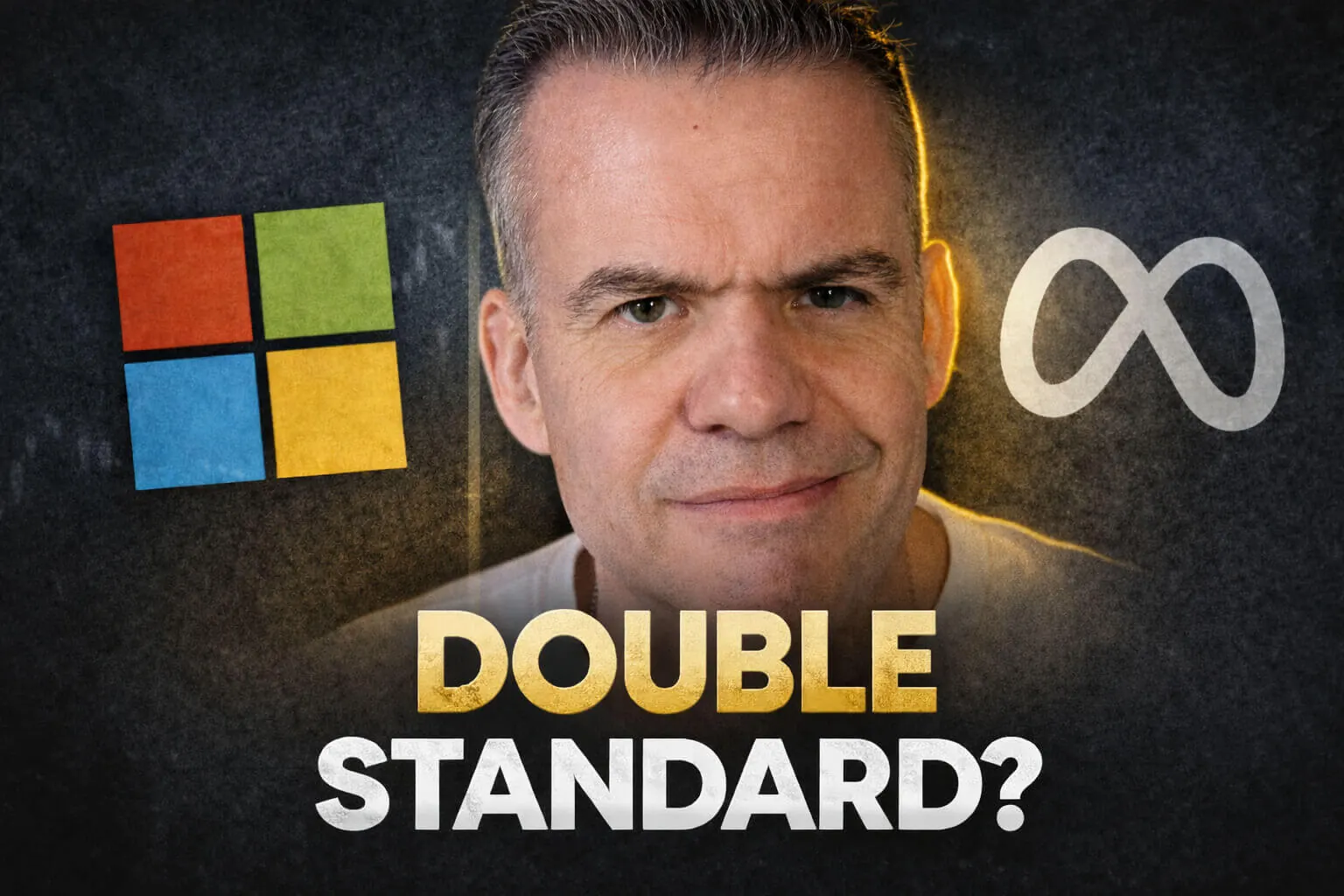
On January 29, 2026, Meta surged 10% while Microsoft plunged 10% -- both after announcing massive AI spending. Here's why Wall Street treats them so differently, and what it means for options traders.
First published January 2026 · Updated with Q4/Q2 earnings data · 9 min read
On January 29, 2026, something wild happened. Two of the biggest tech companies on the planet — Microsoft and Meta — both reported earnings on the same day. Both announced massive AI spending plans. Both beat revenue estimates. And the market's reaction? A $357 billion divergence in market cap swings.
Meta surged roughly 10%. Microsoft plunged roughly 10%. Same day. Same theme. Completely opposite outcomes.
I've been trading options long enough to know that earnings season is where fortunes are made and lost. But this particular day was a masterclass in how Wall Street actually thinks about AI spending — and it's not what most people assume. Let me break it down, and then I'll show you how options traders can use moments like this to their advantage.
The Microsoft Side: Big Spending, Slow Returns
Let's start with Microsoft. On paper, their Q2 FY2026 numbers looked solid: $81.3 billion in revenue, up 16.7% year-over-year. Azure cloud revenue grew 31%. The company's AI demand backlog doubled to a staggering $625 billion. These are numbers most companies would kill for.
So why did the stock tank?
Two words: growth deceleration. Azure had been growing at 33% the previous quarter. Dropping to 31% might seem trivial, but when you're valued like a hypergrowth company, any slowdown gets punished. And then there was the capex number: $37.5 billion in a single quarter on AI infrastructure. That's not a typo — $37.5 billion in three months.
Wall Street's concern wasn't that Microsoft was spending on AI. It was that the spending wasn't translating into accelerating revenue growth fast enough. The $625 billion backlog sounds impressive, but backlog isn't revenue. It's a promise. And promises don't show up on the income statement.
There's also the OpenAI concentration risk. A significant chunk of Microsoft's AI narrative is tied to its partnership with OpenAI. If that relationship hits turbulence — or if OpenAI's competitive moat erodes — Microsoft's AI premium gets questioned. The market was essentially saying: "Show us the receipts, not the projections."
The Meta Side: AI That's Already Paying Off
Now flip to Meta. Their Q4 2025 earnings told a completely different story: $48.4 billion in revenue, up 21% year-over-year. But it wasn't just the top-line growth that impressed Wall Street — it was where the growth was coming from.
Meta's AI investments were already showing up in their core business. Their AI-powered recommendation engine was driving more engagement across Instagram Reels and Facebook. The ad targeting algorithms, rebuilt with advanced AI models, were delivering better conversion rates for advertisers. This meant higher ad impressions, better pricing power, and advertisers willing to spend more per impression.
The result? Revenue growth that exceeded expectations, not just met them. Meta's AI wasn't a future bet — it was a present-tense money printer.
But here's the nuance that most coverage missed: Meta announced capex guidance of $60-65 billion for 2026. That's an enormous number. In any other context, Wall Street would have balked. But because Meta had already demonstrated that AI spending equals immediate revenue growth, the market gave them a pass — even rewarded them for it.
The lesson? It's not about how much you spend. It's about how fast the spending shows up in revenue.
💡 Why Wall Street Treats Them Differently
This isn't really about Microsoft being "bad" and Meta being "good." It's about where the money shows up in the financial statements:
Meta's AI spend → Income Statement. Their AI improvements directly boost ad revenue. Every dollar spent on AI recommendations translates into measurable ad performance gains this quarter. Wall Street can see the ROI in real time.
Microsoft's AI spend → Balance Sheet. Data centers, GPU clusters, and infrastructure are capital expenditures that depreciate over 5-7 years. The revenue from these investments comes gradually through Azure consumption. Wall Street has to trust that the backlog will convert — and trust isn't Wall Street's strong suit.
| Metric | Microsoft (Q2 FY2026) | Meta (Q4 2025) |
|---|---|---|
| Revenue | $81.3B (+16.7% YoY) | $48.4B (+21% YoY) |
| AI Capex | $37.5B (quarterly) | $60-65B (2026 guidance) |
| Stock Reaction | ~-10% post-earnings | ~+10% post-earnings |
| AI Monetization | Backlog-driven, gradual | Immediate ad revenue boost |
| Growth Trend | Azure: 33% → 31% (slowing) | Revenue: 21% (accelerating) |
| Key Risk | OpenAI dependency, capex payback | Sustaining AI-led ad growth |
What This Means for Options Traders
Here's where it gets interesting for us. Earnings-driven moves like this create massive opportunities for options traders, especially those of us who sell premium.
Think about it: both MSFT and META saw roughly 10% moves on earnings day. That kind of volatility means implied volatility (IV) was elevated going into earnings, which means option premiums were fat. If you were selling covered calls or cash-secured puts heading into these reports, you were collecting above-average premium.
The key insight for covered call traders is this: stocks with upcoming catalysts (like earnings) tend to have inflated IV. You can use this to your advantage by selling calls when premiums are rich, then letting theta decay work in your favor as the event passes.
Both MSFT and META are liquid enough for options trading, with tight bid-ask spreads and massive open interest. But they present different risk profiles:
- MSFT covered calls: More defensive play. Lower IV rank typically, but the post-earnings dip could set up a nice entry for selling calls on a recovery bounce.
- META covered calls: Higher IV, higher premium, but also more risk of getting called away on a continued surge. Great for traders comfortable with assignment.
Covered Call Tips for Earnings Season
Whether you're trading MSFT, META, or any other stock around earnings, here are the principles I follow:
1. Check IV Rank Before Selling. I want IV rank above 50 before I sell premium. Earnings season naturally pushes IV higher, but not all stocks inflate equally. Use your broker's IV rank tool or check the options chain for elevated premiums.
2. Mind the Timing. Selling covered calls before earnings means you're taking on event risk. Some traders prefer to sell after the move, once IV has crushed and the stock has found its post-earnings range. Both approaches work — just know which game you're playing.
3. Use Profit Targets. I close my covered calls at 50-80% of max profit. Don't get greedy waiting for expiration when you can lock in gains and redeploy capital.
4. Trade Liquid Names. Stick to stocks with high options volume and tight spreads. Both MSFT and META qualify. If you're just starting out, check our guide on trading options for weekly income on a small account.
Key Takeaways
- Meta and Microsoft both spent massively on AI, but the market rewarded Meta's immediate monetization over Microsoft's long-term infrastructure play
- Wall Street doesn't hate AI spending — it hates spending without visible, near-term returns
- The $357B market cap divergence on the same day highlights how differently the market values AI ROI timelines
- Earnings-driven volatility creates premium-selling opportunities for covered call and put sellers
- Both MSFT and META are viable covered call candidates, but with very different risk-reward profiles
- Always check IV rank, time your entries around catalysts, and use profit targets to manage positions
Want Trade Ideas Like These Delivered Weekly?
Join Cash Flow University for real-time covered call and credit spread scanners, earnings calendars, and a community of premium sellers.
See CFU Pricing →