The Rise of the Retail Trader & The Scam of High Yield ETFs (Read This First Before Buying!)
By Cash Flow University · · 6 min read

Discover how retail traders are reshaping markets and the risks of high yield ETFs before investing.
2025 was retail traders' breakout year—here's how to dominate 2026 without falling for yield traps.
If you're reading this, you've probably seen those flashy ETFs promising 40%, 50%, even 60%+ yields. They look incredible on paper. But here's what Wall Street doesn't want you to know: these products are designed to separate you from your money while making you feel like a genius.
I'm going to show you exactly how this scam works, why the math doesn't add up, and what smart traders are doing instead in 2026. Ready to avoid the high-yield trap?
But first, let's take a moment to celebrate our accomplishments as Retail Traders. We all deserve a huge round of applause!
The Rise of the Retail Trader: A 2025 Breakthrough
Why do we deserve a round of applause? Well, something remarkable happened in 2025. According to JPMorgan's 2025 retail trading report, net inflows into U.S. stocks hit a staggering $308 billion—up 53% from 2024 and 14% above the 2021 meme-stock peak.
Data from Reuters confirms retail trading now accounts for roughly 25% of all market activity. That's not a blip—that's a structural shift in how markets work.
Why? Because retail traders are getting smarter. They're learning from the GameStop saga, the meme stock phenomenon, and yes—the painful lessons of chasing yield.
But raw participation isn't enough. The traders who truly won in 2025 mastered one time-tested strategy...
Buy-the-Dip Strategy: Why It Has Always Worked
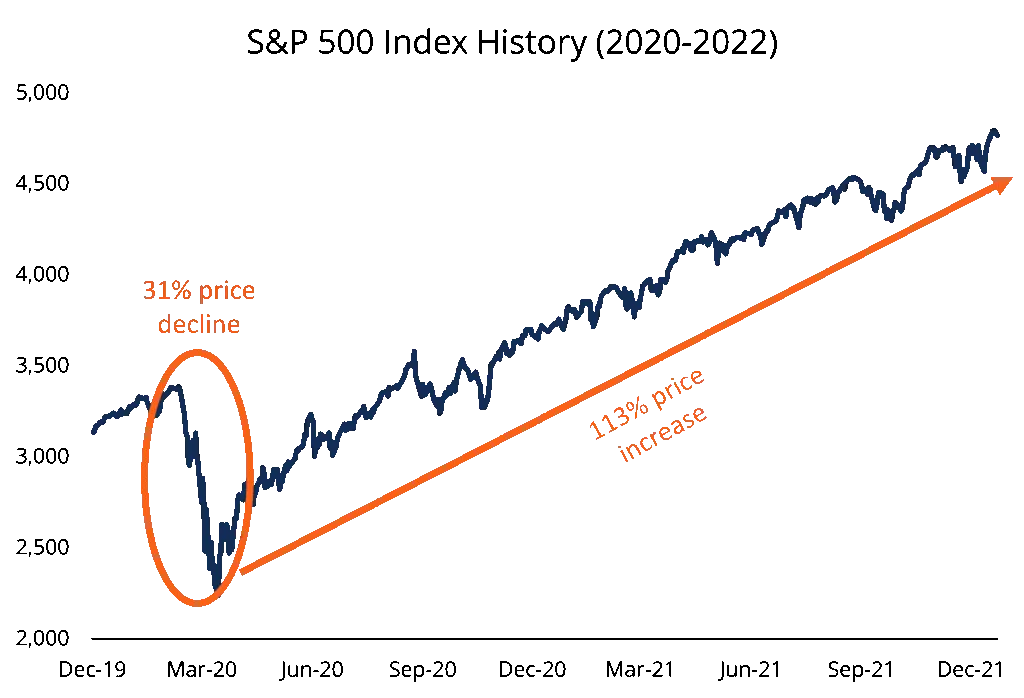
In March 2020, the world stopped. COVID-19 crashed markets 34% in just 23 trading days. Headlines screamed about economic collapse. Smart money was selling.
But here's what happened next: The S&P 500 recovered all losses in just 5 months. Those who bought the dip saw 100%+ gains by 2021.
💰 My Personal Story: From $200K to Millionaire
In 2020, I made one of the best decisions of my trading career. While everyone panicked, I deployed capital aggressively into quality stocks at 30-40% discounts. That single decision—buying the dip—accelerated my path to becoming a millionaire by at least 5 years. This is the same approach I teach at Cash Flow University, and it's why our members avoided the ULTY disaster.
Buy-the-Dip in 2025
2025 gave us plenty of opportunities to apply this strategy. According to Slickcharts data, the market had several significant pullbacks:
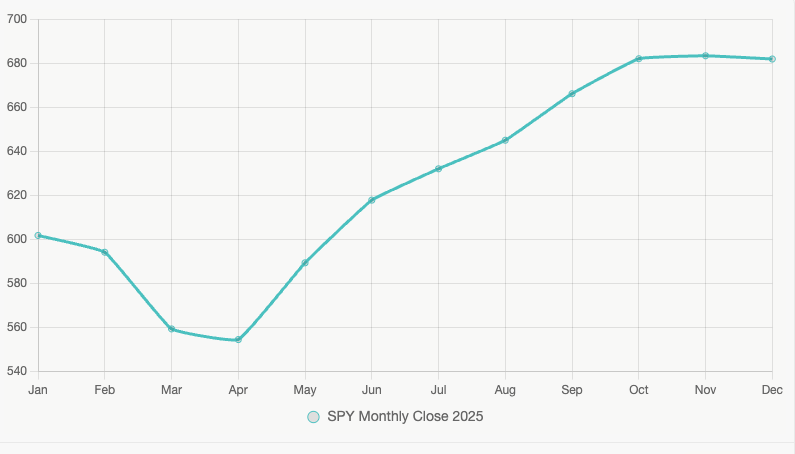
Every dip in that chart? A buying opportunity for those who understood the strategy.
The 2025 Reality Check: Where Your Money Actually Went
Now let's talk about what actually happened to investors' money in 2025. According to Yahoo Finance and Bespoke Investment Group analysis:
See that third box? That's ULTY—the "Ultra High Yield" ETF that promised 65%+ yields. While it paid out big distributions, the fund itself collapsed by 50%.
Understanding Total Return: The Only Metric That Matters
This is where most investors get fooled. They see a 60% "yield" and think they're making 60% on their money. Wrong.
What if your 'income' is just your principal in disguise?
Total Return = Price Change + Distributions
Here's what that looks like in practice:
| Investment | Start Price | End Price | Distributions | Total Return |
|---|---|---|---|---|
| TSLA Stock | $248.48 | $403.84 | $0 | +62.5% |
| TSLY ETF | $20.02 | $14.64 | ~$4.50 | ~-5% |
Let that sink in. TSLA shareholders made +62.5%. TSLY holders—despite that juicy "yield"—lost money.
NAV Erosion: The Silent Portfolio Killer
Here's the mechanism that destroys high-yield ETF investors:
🔥 How NAV Erosion Works
Think of it like withdrawing from your savings account to pay yourself a 'bonus'—it shrinks your base over time.
- Fund sells covered calls to generate premium income
- Caps upside when stocks rally (misses the gains)
- Full downside exposure when stocks fall
- Pays out more than it earns, depleting fund assets
- NAV shrinks, requiring larger distributions just to maintain yield %
It's a death spiral. The more they pay out, the smaller the fund gets, the harder it is to generate real returns.
The Math: $10,000 Investment Comparison
Let's see what happens to a $10,000 investment across different market scenarios:
| Scenario | TSLA ($10k) | TSLY ($10k) |
|---|---|---|
| 🐂 Bull Market (+60%) | $16,000 | $10,500* |
| 📊 Flat Market (0%) | $10,000 | $9,500* |
| 🐻 Bear Market (-30%) | $7,000 | $6,000* |
*TSLY values include ~$1,500 in distributions but suffer from NAV erosion and capped upside. Actual results depend on timing and volatility.
Notice the pattern? TSLY underperforms in every scenario. In bull markets, the upside cap kills you. In bear markets, you get the full loss. Even in flat markets, NAV erosion eats away at your principal.
2025 High-Yield ETF Scorecard
Let's look at how these "income" products actually performed:
The pattern is clear: the higher the advertised yield, the bigger the gap between what they promise and what you actually get.
The Truth About Covered Calls (And Why These ETFs Get It Wrong)
Here's the thing—covered calls aren't inherently bad. I use them myself. But there's a massive difference between:
❌ What These ETFs Do
- Sell calls systematically on 100% of holdings
- Short-dated options (weekly) for maximum premium
- No discretion—sell regardless of market conditions
- Cap upside in every rally
✅ What Smart Traders Do
- Sell calls selectively after big run-ups
- Choose optimal expiration dates
- Adjust based on volatility conditions
- Keep most shares uncovered to run
💡 My Covered Call Approach
I sell covered calls selectively after big run-ups. Most of the time they're left uncovered to run. This is the kind of nuanced strategy we teach at Cash Flow University—not the mechanical yield-chasing that destroys portfolios.
2026 Lessons: What Smart Traders Do Instead
Based on everything we've learned from 2025, here's the playbook for 2026:
✅ The 2026 Smart Trader Checklist
- ✓ Focus on total return, not advertised yield
- ✓ Buy quality stocks during market dips (historically, in resilient markets, every major crash rebounds)
- ✓ Use options strategically, not mechanically
- ✓ Understand NAV erosion before chasing yield
- ✓ Get educated—join a community that teaches real strategies
The CFU Advantage: Real Education, Real Results
At Cash Flow University, we've guided thousands of retail traders through these traps with proven education. Our members didn't fall for the ULTY scam because they understood the math before it collapsed.
We teach:
- Options fundamentals that actually work
- Risk management that protects your capital
- Income strategies that don't destroy your portfolio
- When to buy dips and when to stay patient
Ready to Trade Smarter in 2026?
Join thousands of retail traders who learned to avoid yield traps and build real wealth.
Join CFU TodayLearn the strategies that actually work.
The Bottom Line
2025 proved that retail traders are a force to be reckoned with. But with great power comes great responsibility—and the responsibility to not fall for Wall Street's yield traps.
Remember:
- High advertised yields often mask massive NAV erosion
- Total return is the only metric that matters
- Historically, in resilient markets, buying quality during dips beats chasing income
- Education is your best investment
The retail trading revolution is just getting started. Make sure you're on the right side of it.
Trade smart. Trade educated. Trade with CFU.