Position Sizing That Keeps Options Traders Alive
By Cash Flow University · · 7 min read
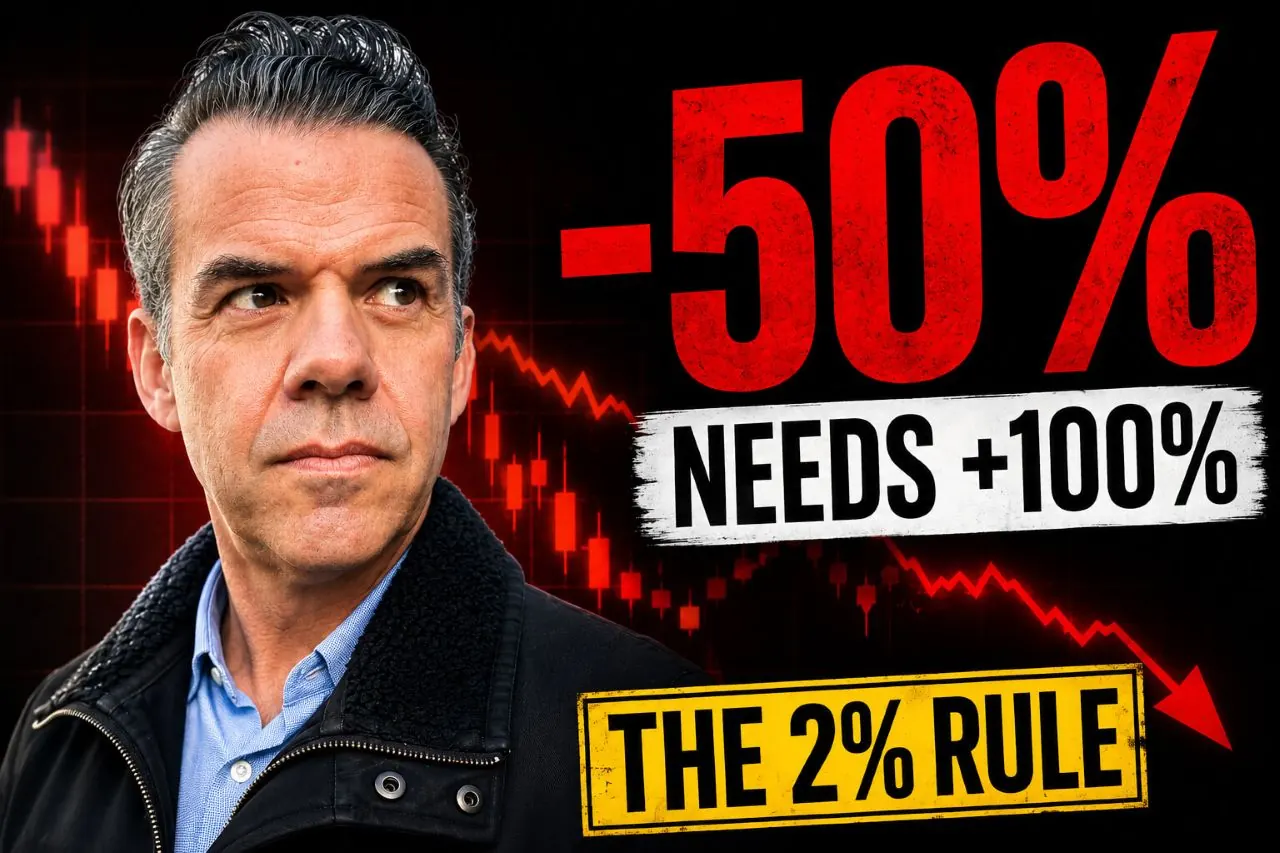
I show how a strict 2% position-sizing rule limits drawdowns, removes emotion, and lets options strategies compound while keeping your account intact.
Last updated: May 12, 2026
Position Sizing for Options Traders: The Rule That Keeps You in the Game
Here is the uncomfortable truth for every new trader. The fastest path to making money in options is not taking bigger positions. It is staying solvent long enough for your edge to compound.
Why Position Sizing Is More Critical Than Your Strategy
Proper position sizing is the most important factor for long-term survival and profit. Most traders obsess over finding the perfect entry signal. They look for a holy grail strategy. They ignore the one variable that determines if they stay in the game. That variable is risk management. Cash Flow University anchors every method in position sizing. Without it, even a winning strategy fails.
Think of it like a ship. Your strategy gives you a statistical edge. This is your tailwind. Position sizing is the hull. A leaky hull sinks you no matter how strong the wind blows. Reckless sizing creates fatal leaks.
"At Cash Flow University, we teach that position sizing is your primary offensive weapon. It guarantees you stay on the field. It lets your positive expectancy pay out."
The Brutal Math of Recovery: Why Small Losses Are a Feature
A trader with a strong edge will lose their account if sizing is reckless. The math of a drawdown is unforgiving. A small loss is easy to recover. Big losses require exponential gains to reach break even. This is where most traders fail.
Consider the reality:
- A 10% loss requires an 11% gain to recover.
- A 25% loss requires a 33% gain to recover.
- A 50% loss requires a 100% gain to recover.
- A 75% loss requires a 400% gain to recover.
Risking too much on one trade creates three failure points:
- Catastrophic Drawdown: One or two bad trades can wipe out dozens of winners. Risking 30% on one position means you need a 43% gain to get back to even. This is a monumental task.
- Emotional Decision-Making: Oversized positions ruin your process. Fear of a large loss makes you hold losers too long. You hope for a reversal. Anxiety makes you exit winners too early. Research from the University of California, Berkeley shows this behavior damages returns.
- Reduced Opportunity: A big drawdown takes up mental and financial capital. It stops you from using your edge on new high-probability trades.
The Core Principle: A Trader's Guide to the 2% Rule
Never risk more than 2% of your total account equity on any single trade. This is a mathematical backstop. It ensures survival. We enforce this rule for every trade alert at Cash Flow University. It works.
Apply it with these steps:
- On a $10,000 account, your max loss per trade is $200.
- On a $25,000 account, your max loss per trade is $500.
- On a $100,000 account, your max loss per trade is $2,000.
The key is knowing what risk means. It is the defined maximum loss on the trade. Calculate this before you enter. It is not the premium you pay or the margin required. For defined-risk strategies like spreads, this is simple. For undefined-risk trades, it is the loss at your stop-loss level.
Calculating Position Size in the Real World: Practical Examples
Divide your per-trade risk limit by the max loss per contract. Here are three scenarios for a $25,000 account. The 2% risk limit is $500.
Example 1: Put Credit Spread on SPY
You sell a put credit spread on the SPY. You sell the $450 put and buy the $445 put. You collect a $1.50 credit. This is $150 per contract. The spread is $5 wide.
- Max Loss per Contract: ($5 spread width - $1.50 credit) x 100 = $350.
- Your Risk Limit: $500.
- Position Size Calculation: $500 / $350 = 1.42 contracts.
- Action: Round down. You can only place 1 contract.
Example 2: Cash-Secured Put on a Growth Stock
You sell a cash-secured put on stock XYZ at the $100 strike. You collect $4.00 in premium. This is $400 per contract. Buying power is about $10,000, but that is not your risk.
- Max Loss per Contract: ($100 strike - $4.00 premium) x 100 = $9,600 if the stock goes to $0. You must define your risk with a stop-loss. You plan to exit if the stock hits $95.
- Defined Loss per Contract: At $95, your sold put is worth at least $5.00. Your loss is ($5.00 loss - $4.00 initial credit) x 100 = $100.
- Position Size Calculation: $500 risk limit / $100 defined loss = 5 contracts.
- Action: You can sell 5 contracts. This uses $50,000 cash, but your pre-defined risk is only $500 total.
Example 3: Speculative Long Call on QQQ
You think QQQ is going up. You buy a call option for $4.20. This is $420 per contract. For a long option, the risk is the premium paid.
- Max Loss per Contract: $420.
- Your Risk Limit: $500.
- Position Size Calculation: $500 / $420 = 1.19 contracts.
- Action: You can buy 1 contract. The $420 risk is within your $500 limit.
Advanced Sizing Concepts for Experienced Traders
Master the 2% rule first. Then use dynamic sizing. Traders with large portfolios can evolve beyond static sizing.
Adjusting Sizing Based on Implied Volatility (IV)
When IV is high, premiums are richer. You collect more credit for the same spread. This improves return on capital. Some traders reduce position size to 1.5% in high IV. This offsets systemic risk. Others increase size in low IV to reach profit targets. You must use a rules-based system. Do not adjust on a whim.
Scaling Your Size as Your Account Grows
As your account grows, your dollar risk increases. A $100,000 account has a $2,000 risk limit. This lets you increase contract sizes. It speeds up compounding. Do this systematically. Tom Sosnoff of tastytrade says: "Trade small, trade often." Your edge comes from many trades. It does not come from a few large bets. Resist the urge to abandon your core principles.
The "Stay in the Game" Framework: Your 5-Step Sizing Checklist
Use this checklist before every trade. It keeps your sizing mechanical and disciplined. This is our process at Cash Flow University.
- Know Your Number: Calculate your 2% risk limit in dollars. Write it on a sticky note. Put it on your monitor. This is your most important number.
- Calculate Max Loss Per Unit: Look at the trade ticket. Find the max potential loss per contract. For spreads, it is width minus credit. For long options, it is the debit paid. For naked options, use your stop-loss level.
- Divide and Round Down: Divide your dollar risk limit by the max loss per contract. Always round down. No exceptions.
- Monitor Total Portfolio Risk: Add the risk of all open positions. Keep total account risk below 20-25%. Ten trades at 2% risk equals 20% at risk. This stops a black swan event from destroying your account.
- Use a Trading Journal: Log every trade. Track risk, size, and outcome. This builds discipline. It shows if you follow your own rules.
Your Next Step: Make Sizing an Unbreakable Habit
Success comes to those who survive their early mistakes. Consistency creates fast returns. High-risk bets do not. CBOE research shows most options expire worthless. Selling premium with proper sizing is a powerful model for income.
Your goal is not one amazing trade. It is to stay in the game. Place hundreds of high-probability trades. This is how you build wealth. Calculate your 2% number today. Use it on your next trade.
See how I size covered calls, credit spreads, and puts at joincfu.com.
Frequently Asked Questions (FAQ) on Position Sizing
- Q: What is the 2% Rule in options trading?
- A: You never risk more than 2% of your account on one trade. For a $10,000 account, your max loss is $200.
- Q: How do I calculate position size for a put credit spread?
- A: Find the max loss per contract. Subtract the credit from the spread width. Divide your 2% risk limit by this number. Round down to the nearest whole contract.
- Q: How does volatility affect my position sizing?
- A: High IV means higher premiums and bigger moves. Some traders cut risk to 1.5% in high IV to lower overall risk. Others stay at 2% in low IV for profit targets. You need a plan.
- Q: Is sizing more important than picking the right strategy?
- A: Yes. A winning strategy with reckless sizing will blow up your account. A mediocre strategy with perfect sizing can profit. Sizing is your primary defense.
- Q: How much of my account should be at risk across all positions?
- A: Individual trades are capped at 2%. Your total risk should stay under 20-25%. This stops market-wide events from wiping you out.
- Q: Can I use a larger percentage if my account is very small?
- A: Some use 3-5% for small accounts. This increases drawdown risk. If you do this, you must be very careful with large swings.