Insiders are Out: Why I'm Using a Call Credit Spread to Trade Amazon’s Slide
By Cash Flow University · · 4 min read
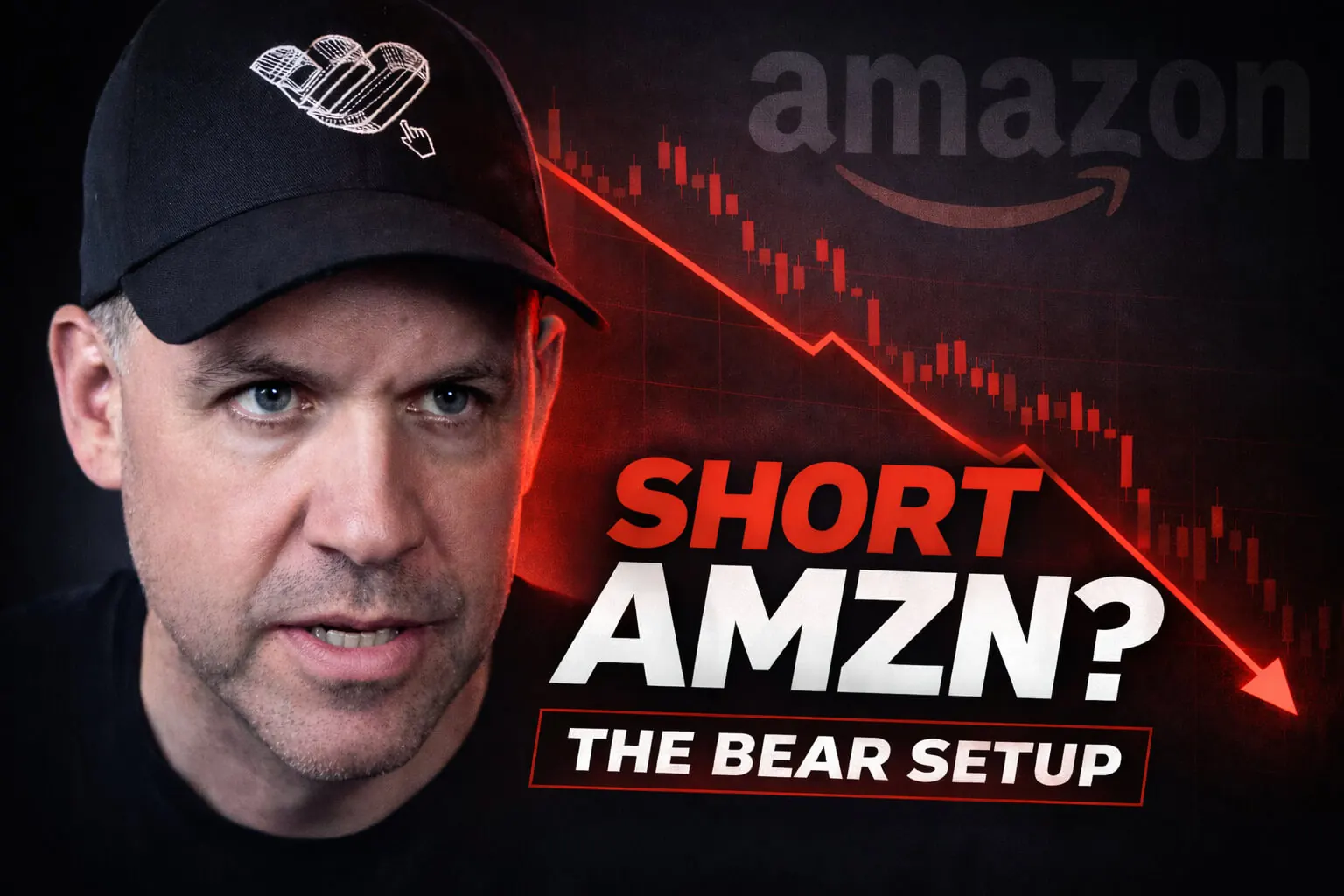
Net insider selling and a break below key moving averages create a bearish setup on Amazon. Here is how I am using a call credit spread to trade the slide with defined risk.
In the fast-paced world of stock trading, Amazon has always been a fascinating stock to watch. While they recently surpassed Walmart in terms of total revenue, the current market scenario paints a different picture. Net insider selling is happening at Amazon, and their stock price has dipped below both the 200-day and the 50-day moving averages. This market condition opens up potential trading opportunities, particularly for those interested in a more bearish approach.
I have been watching Amazon closely, and when I see insiders stepping away from their own stock combined with a technical breakdown below major moving averages, it tells me something. It tells me the smart money is not confident in the near-term direction. That is exactly the kind of setup I look for when placing a bearish options trade.
Assessing the Opportunity
Given the current situation, there is a promising opportunity for traders to enter a call credit spread on Amazon. For those not familiar, a call credit spread is an options strategy that involves selling and buying calls with different strike prices to profit from a decline in the underlying asset's price. You collect a credit upfront, and if the stock stays below your short strike by expiration, you keep that credit as profit.
The beauty of this strategy is that your risk is defined from the start. You know exactly how much you can make and exactly how much you can lose before you ever place the trade. That kind of clarity is what separates disciplined traders from gamblers.
Setting Up the Trade
To get started, I head over to my brokerage account and pull up Amazon's trading page. Our strategy here is to execute a vertical call spread. As part of setting up this trade, the expiration date needs to be moved to March 20th, which aligns with our market predictions.
The next step is to sell the 225 call and counterbalance this with a buy at the 230 call. By doing this, we are establishing the spread with a $5 width between strikes.
Key Financials and Execution
Now, focusing on the financials of this trade, I enter a limit order at $0.85, taking into account that we are dealing with 100 shares per contract. When we review the order, it results in an $85 credit, which offsets the risk involved. The maximum risk is calculated at $415, yielding a 20% return on risk.
Managing the Trade
An essential part of successful trading is managing both the opportunity and the risk. For this trade, I recommend setting a limit order to close at $0.15 on a Good Til Canceled (GTC) basis. This allows for flexibility and responsiveness to market shifts.
💡 Pro Tip: Setting a GTC limit order at $0.15 means you automatically close the trade once you have captured most of the credit. This locks in roughly 82% of the max profit without needing to watch the screen every day. Set it and let time decay do the work.
It is crucial to monitor the trade and be prepared to roll it over if Amazon's stock crosses the 225 mark and approaches 230. This is a risk management measure to minimize potential losses.
⚠️ Risk Management: If Amazon crosses the 225 strike and moves toward 230, consider rolling the spread out in time to a later expiration. Rolling allows you to collect additional credit and gives the trade more time to work in your favor. Never let a trade turn into a hope trade.
Capitalizing on Market Volatility
This bearish setup for Amazon provides an excellent opportunity to sell some volatility and generate income from it. By strategically using a call credit spread, traders can potentially capitalize on the current market trends affecting Amazon stock.
Keep a close eye on how the market develops and be ready to adapt your strategy as needed. Your ability to react promptly to these signals can significantly impact the success of your trades.
Key Takeaways
✅ Net insider selling signals bearish sentiment
✅ Price below both the 50-day and 200-day MAs
✅ Call credit spread defines your risk upfront
✅ 20% return on risk with a $5 wide spread
✅ GTC limit order automates your exit strategy