Implied Volatility: The One Number Options Traders Must Know
By Cash Flow University · · 6 min read
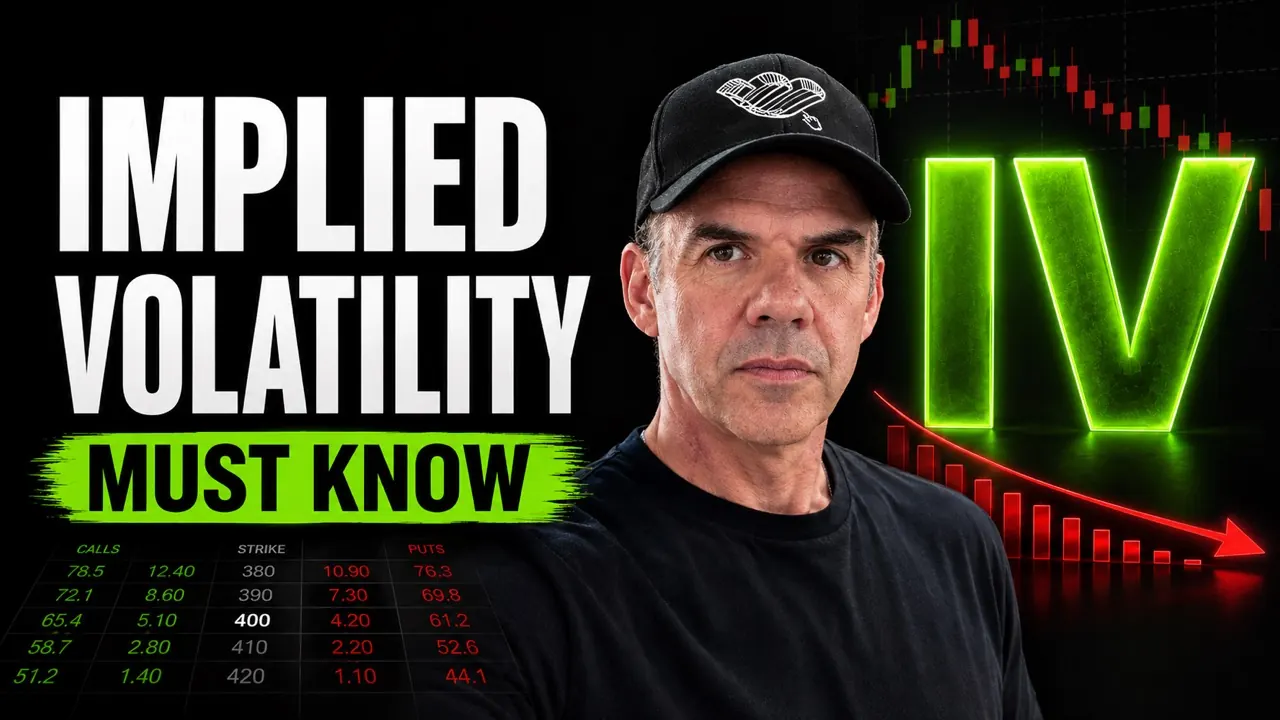
I explain implied volatility, IV crush, and a simple IV-percentile filter that shifts the edge to sellers and builds repeatable options income.
Implied Volatility: The One Number Options Traders Must Know
Last updated: May 12, 2026
Implied Volatility Explained: The One Number I Check Before Every Trade
Implied Volatility (IV) is the most important data point for pricing risk and reward. I trade options for a living. I built Cash Flow University on one idea: understand the pricing mechanics other traders ignore. I never enter a trade without checking IV. If you buy options without knowing IV, you gamble on price and volatility together. That is how accounts vanish. Understanding IV is the first step toward trading like a pro.
The #1 Mistake: Ignoring IV crush After Big Events
Traders lose money most often by falling victim to IV crush. This happens even when they predict direction right. High IV before an event like earnings collapses after the news drops. This price deflation can be stronger than the stock movement itself.
Case Study: A Correct Prediction That Still Lost Money
I see this sequence every week:
- A trader expects positive earnings for XYZ Corp. The stock is at $100.
- They buy a call option with a $105 strike for $2.50. Anxiety has pushed IV to 130%.
- The company beats expectations. The stock rises to $104. The trader was right on direction.
- Then the uncertainty vanishes. IV collapses from 130% back to 40%.
- The call option is now only worth $1.10 despite the stock move.
As we teach at Cash Flow University, "We don’t predict the market; we price its predictions. High IV is the market overpaying for insurance. We are happy to be the seller."
What is Implied Volatility? A Practical Definition
Implied volatility is the market estimate of a stock potential movement. It is baked into option prices as an annual percentage. Think of it like an insurance premium. Florida hurricane insurance costs more just before a storm. This happens because the fear of the storm is high. High IV means the market prices in high future fluctuation.
It is not a measure of past movement. It is the expectation of future movement. This expectation leads to expensive options. That is a edge for sellers. CBOE research shows most options expire worthless. Sell insurance when the premium is high. This stacks the odds.
The Volatility Seller Edge: Why We Sell Fear and Buy Time
A steady edge comes from selling expensive premium when IV is high. We then wait for it to return to the average. We do not predict stock direction. We find when the fear of movement is too expensive. We sell options to collect that premium. Time decay and IV contraction become our profit drivers.
This is not a theory. Research from tastytrade shows that selling options when IV Rank is above 50 has a higher win rate. They studied decades of data. This is our core method.
The Strategies We Use to Capture This Edge:
- Put Credit Spreads: Our main tool for income. It works when you are bullish or neutral. Use it to sell expensive downside fear.
- Cash-Secured Puts: Get paid to buy a stock you want at a lower price. Use this on strong stocks.
- Covered Calls: Generate income from shares you own. Sell calls when IV is high to get the most premium.
- Iron Condors: Use this when you expect a stock to stay in a range. You sell a call spread and a put spread at the same time.
Your 60-Second Pre-Trade IV Checklist
Run this four-step check before any trade. Ensure you are on the right side of the price. This takes less than a minute. It is the base of every trade I make.
- Check IV Rank / Percentile. Is it high? IV Rank shows where IV sits compared to the last year. We only sell premium when IV Rank is above 40-50%. This ensures we sell when prices are objectively high.
- Compare IV vs. HV. Is the market overpaying for risk? If IV is 70% but historic movement is 35%, the market prices in double the movement. That 35% gap is the volatility premium. It is the seller edge.
- Calculate the Implied Move. What is the market pricing? Check the price of an ATM straddle. A $15 straddle on a $150 stock implies a 10% move. If you expect a smaller move, sell premium outside that range.
- Assess Volatility Skew. Where is the fear? Notice if puts cost more than calls at the same distance. This is put skew. It shows fear is on the downside. That offers a chance to sell put credit spreads.
The Cash Flow University Blueprint for Trading IV
The fast path to income is selling overpriced insurance. Do not chase directional gambles. Options trading is a business of risk and math. My process looks like this:
- I scan a list of liquid, strong companies.
- I filter for an IV Rank over 40%. No high IV Rank means no trade.
- I use the checklist to find the edge and the expected move.
- I pick a strategy like a put credit spread with strikes outside the move.
- I size the position so a max loss is only 1-2% of my account. This is a hard rule.
- I manage the trade as time and IV work for me. I close for profit before expiration.
This process moves the odds in your favor. Not every trade wins. Long-term use of an edge builds wealth.
Frequently Asked Questions About Implied Volatility
What is implied volatility in simple terms?
It is the market guess of how much a stock will move. It is the fear premium in an option price.
Why do options lose value when the stock moves as predicted?
This is IV crush. If you buy with high IV, the collapse in IV can kill your gains even if you are right on direction.
Is high IV good or bad?
It is great for sellers but risky for buyers. High IV means more premium to collect. It gives sellers a larger cushion.
What is IV Rank and why does it matter?
IV Rank gives context. It shows where IV sits in its 52-week range. A high rank means premium is expensive compared to itself. It signals a time to sell.
What happens if IV increases after I sell a spread?
The position shows a temporary loss because the insurance value rose. Time decay still works for you. Manage your size. You can often hold until theta and IV contraction take over.
Which strategies benefit most from high IV?
Any credit strategy: put credit spreads, cash-secured puts, covered calls, and iron condors profit when high IV drops.
Final Word
The fast path to income is not chasing tickers. It is understanding pricing. Use an IV filter to find edges. Sell premium where the math works. Size trades so no single loss breaks you. That is how we trade at Cash Flow University. We use exact entries and defined risk. We focus on doing it again and again.
Want to see this? I show real setups and sizing in our alerts and blog at joincfu.com.